Showing posts with label history of English spelling. Show all posts

Tongues and tongs and medieval monks


The picture above made me laugh. One of those times when you think, "Hmm...spelling really does matter sometimes".


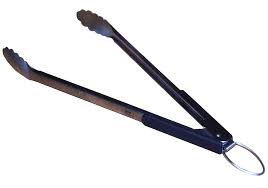
But why do we spell this:tongue but these: tongs?

Let's take tong first. We spell this as it sounds, like song, oblong, dongle.  Easy!

But tongue rhymes with hung (at least in my accent), so why the o and why the u?

To understand the o, look at some other words that use o when it sounds like u: come, some, love, monk etc. In the middle ages many written letters took the form of up and down strokes (called minims):


Can you identify these letters? (They don't make a word but they are in alphabetical order):

Quite tricky, isn't it? So if some and love were spelt as they sound they would look like this:

And if the word for the thing in your mouth was spelt tung, it would look like this:

The u and n are not so easy to read together. Compare it with :

So the monks, who were the ones who wrote in those days, replaced the u in some common words with o. It made it easier to read but more difficult to write!
Now, what about the u after the g in tongue? To find out about this I consulted my go-to etymology http://www.etymonline.com/ and read there:
website:

The spelling of the ending of the word apparently is a 14c. attempt to indicate proper pronunciation, but the result is "neither etymological nor phonetic, and is only in a very small degree historical" [OED].

So in other words, someone thought it would be easier to read the g in tongue correctly than it would be in tong or tung. We don't know why they thought this and, well, they were probably wrong (possibly right in their own accent), but we are now stuck with this spelling.

Anyway, guys, please don't touch the bread with your hands or tongues. Especially tongues!

Acknowledgements
The bread image has been circulating on social media but I couldn't find the original source I'm afraid.
The tongue image is from: https://upload.wikimedia.org/wikipedia/commons/thumb/7/7e/Face-tongue.svg/768px-Face-tongue.svg.png
The tongs image: https://upload.wikimedia.org/wikipedia/commons/1/15/Grilling-tongs.png
The monk image is from https://upload.wikimedia.org/wikipedia/commons/thumb/4/49/Medieval_writing_desk.jpg/602px-Medieval_writing_desk.jpg
The medieval writing is done with http://fontmeme.com/old-english-fonts/#none


"What Teachers Should Know About Spelling" article

I am grateful to Megan, an Australian follower of The Spelling Blog, for pointing me to this summary of what seems like a very interesting talk by Dr Misty Adoniou about teaching spelling. Her ideas are similar to mine in many ways but have some really interesting variations. To summarise the summary(!):

  • Phonics and visual skills are not the most important indicators of being a good speller
  • English is morpho-phonemic (based on meaning as well as sound) and etymology (word origin) plays a large part, so these two aspects should be explicitly taught across the curriculum (if taught in English, of course)
  • We need to teach 6 types of knowledge about words to spell them well: meaning, sound, acceptable and typical letter patterns, origins, parts of words and remembering what words look like.
  • We should teach spelling strategies through words that learners meet in context  in real books rather than having lists of words to learn that illustrate a strategy.

Thank you, Misty, Megan and Tina Williamson, the summary author. More about Misty Adoniou

Johanna

Aspire, Inspire and Expire - related meanings?

I saw this on my Facebook feed:
https://fbcdn-sphotos-g-a.akamaihd.net/hphotos-ak-ash4/1044294_204622203023918_1799367311_n.jpg

A neat little quote for teachers I thought. Then I couldn't help looking at those three spire words and wondering what they had in common in terms of meaning. So off to some of my favourite etymological websites (www.etymonline.com and wordinfo.info) and here's what I found and worked out. 

The root here is spire meaning breathe or breath life into  from the Latin spirare

  • aspire - to breathe life upon something- to have hope
  • inspire - to breathe or blow into another - in other words, "influence or animate with an idea or purpose" 
  • expire - breathe out, especially for the last time (so meaning die or finish) - spelling note: ex means out of but we can't put that before the whole word spire (exspire) because x is never followed by s except across a compound word such as flaxseed)

And here are some more spire words

  • conspire - literally breathe together, but means to plot something together
  • perspire - to breathe through. The sweat meaning came later but I suppose is about a kind of breathing through the skin.
  • respire - this literally means breathe again but I really don't know why it's again. I guess just one breath isn't enough to keep you alive!
The there are all the spirit words that are also related: spirited, spiritual, etc

But, by the way, the word spire itself, meaning a tall pointed tower, comes from a completely different root. It's related to an Old Norse word meaning a slender stalk. 

Love this etymology stuff! Feel free to add your own etymological 'noticings' in the comments.
Johanna


Ya gonna wanna sorta luv this - non-standard spelling surprise

I wanna look at some 'non-standard' spellings. I'm gonna surprise ya wiv some information about dem. I dunno about u but I thought these spellings were sorta new, from the sixties maybe. But I gotta tell ya, they've been around a long, long time. Ya might not believe me, but it must be true cos I read in it David Crystal's book, which I luv by the way, called The Story of English in 100 Words. He tells us when these words first made it into the dictionaries as 'alternative' spellings cos they were used so frequently:
  • wanna   -   1896
  • gonna    -   1913
  • ya         -   1941    
  • wiv       -   1898
  • dunno   -   1842
  • sorta     -   1790 (yes, really!)
  • gotta     -   1924
  • cos       -   1828
  • luv        -   1898
And look at this:
An S A now I mean 2 write
2 U sweet K T J 
The beginning of a poem called "An Essay to Miss Catherine Jay" by an anonymous author in 1875.
 
Great to see how the young people of today are reviving old spellings!


Johanna

Improving spelling - never too late: the Jim Henry Story

Jim Henry's family didn't know he was illiterate and in his early 90's (yes, nineties!) he decided he wanted to learn to read and write. He not only achieved this dream but at 98 the lobster fisherman from Connecticut,USA has just written a book about his life. Read more here: http://m.smh.com.au/world/novel-approach-to-literacy-20111230-1pfiz.html

Wow! Pretty inspiring. And a story worth remembering when you think you're getting too old to sort something out.

Have you always felt that your spelling was not good enough? Is it time to do something about it? Try these tips:

1) Read what you enjoy and are comfortable with.

2) Write just a little bit each day. It doesn't have to be long but try to get it right by using a dictionary. Use a pen, but as you come across any words you're not 100% sure about, write these in pencil. Then check them. Or if you prefer to type, turn the Autocorrect off and type the words you're not sure about in a different colour.

3) Keep a notebook (paper or digital) of words you've looked up. Look through your notebooks sometimes and try to see patterns in spelling.

4) Try to learn why words are spelled as they are. Can you relate them to another word with similar meaning? Or look at http://www.etymonline.com/ to see where the word has come from.

5) Try to learn the spelling of words you need a lot or have big problems with. Use my Look Say Cover Write and Check chart: http://thespellingblog.blogspot.com/p/downloads.html or try this great program to help you: http://www.amblesideprimary.com/ambleweb/lookcover/lookcover.html

6) Explore and follow this blog.

7) Get help from a friend, family member or teacher. But make sure it's not someone who makes you feel bad about your spelling. Perhaps you can help them with something that they're not very good at in return - it makes for a more balanced relationship.

8) Remember if a man in his 90's can learn to read and write from scratch, there's no reason why you can't work on improving your spelling.

The tips above are very general. Much more throughout the blog.

Go for it!

Johanna

Learned or learnt? Spelled or spelt? - A Google Ngram analysis

 Learned or learnt? Spelled or spelt? Burned or burnt? Which spelling do you use? If you speak American English, probably the ed version, if you speak British English, you probably just write what you feel like on the day. I know I use both, but I also know I need to be consistent in my forthcoming book, Teaching English Spelling. So time for some research and I found this extraordinary and very new tool from GoogleLabs (still in Beta) called Google Ngram. You write two or more (up to five) words or phrases into the Ngram search box and it searches a corpus of 500 billion words from 5.2 million books on Google Books. Then it turns out a graph of how often the word or phrase occurred in books in the years you have specified. You can search all English books, British English books, or American English books. Look, rather than explain, I'll show you what my Ngram results were:


British English 1800 - 2000: learnt (blue) vs learned (red)

We can see learned is more common but declining. The worrying thing is that we just seem to be talking about both of them less! Let's see if the same is happening in American English:

American English 1800 - 2000: learnt (blue) vs learned (red)

Ah, less of a decline there! And a very clear and consistent preference for the ed ending.

Now burnt and burned:

British English 1800 - 2000: burnt (blue) vs burned (red)

Oh, interesting! As the years have passed British English speakers have burned about the same but burnt a lot less. No idea why! And American English?


American English 1800 - 2000: burnt (blue) vs burned (red)

Oh, wow! Completely different. Preference swapped over mid-18th century. No coincidence I suppose that Noah Webster's American Dictionary of the English Language was published in 1828.

What about my big question: spelt or spelled? 

British English 1800 - 2000: spelt (blue) vs spelled (red)

So traditionally spelt in British English but the American English has gained ground over the past 60 years and now spelled has taken over. But in American English:
American English 1800 - 2000: spelt (blue) vs spelled (red)

No competition!

So which should I use in my book? You may think spelled wins hands down, but I wonder if I should support the underdog? I'm planning to bring out a British version first, closely followed by an American version. Perhaps spelt needs a little boost from me in the British version, then spelled in the American one. But then again ...

Which will I do? There's only one way to find out ...send me your email address and I'll let you know when the book's out (soon)!

And which should you use? What do you think? Let me know in the comments. 
What do you think of Google Ngram?
How could you use it?

Johanna


Spelling loanwords in English and other languages

There are lots of reasons why English spelling is like it is (see previous post: http://thespellingblog.blogspot.com/2008/12/5-reasons-why-english-is-so-difficult.html ) but one of them is that when words are borrowed from other languages the English usually retain the spelling.

I have just returned from a trip to Malaysia and was interested to see many English loanwords in Bahasa Malaysian (the Malay language) where the spelling has been changed to reflect their own spelling conventions and in some cases their pronunciation too. So you might ...
• ... go to work by bas
• ... nibble on a biskut
• ...put your car in the garaj
• ... buy a ticket at the kaunter
• ... be late for your English kelas
• ... buy a new komputer
• ... take a mesej for someone
• ... try to understand a sistem
• ... take a teksi
• ... watch televisyen, or
• ... visit a ...


In English, we try to keep the original pronunciation (often failing miserably!) and the original spelling. We even keep accents that we don’t usually use; at least we try, though they do sometimes find themselves sitting on the wrong letter.

I am writing this from a trip around the some Balkan countries and my host informs me that in Slovene and Croatian when English words are used the original spelling is retained, whereas Serbia prefers to keep true to its own spelling conventions so loanword spellings are changed to reflect that.

What about in another language that you know? When words are ‘borrowed’ from other languages, is the spelling altered?

Interesting? You might like these previous posts:
http://thespellingblog.blogspot.com/2010/03/10-commonly-misspelled-words-and-how-to.html
http://thespellingblog.blogspot.com/2010/01/plurals-of-words-ending-in-o-when-to.html
http://thespellingblog.blogspot.com/2009/11/reason-for-love-and-dove-above-done.html

Spelling links

I've started collecting links to great spelling resources on the web.

What you can do:
  1. Browse the great links here in my Diigo Spelling Group.
  2. Join the Spelling Group and add your own links .

The reason for love? And dove, above, done, wonder, come and some.

Have you ever wondered why we spell love, some, done as we do rather than *luv, *sum and *dun? The reason may surprise you.

Middle English manuscript was less rounded than ours is medieval manuscriptnowadays and it was largely made up of vertical strokes, called 'minims'. Also 'u' and 'v' were often interchangeable - written as 'v' at the beginning of the word and 'u' in the middle. So you can imagine that that letter strings of 'uv', 'um', and 'un' were pretty hard to work out - just a row of minims. So to make it easier to read, scribes started to make the 'u' into a more rounded 'o' in several words: love, dove, glove, above, shove, cover, oven; done, one, wonder, money, son, monk; come, some, etc. They are all spelled with 'o' but make the short 'u' sound, as in cut. (This explanation from David Crystal in The Encyclopedia of the English Language, p40.)

That still leaves the question of the final 'e' in some of the words above. In Old English, if there was a final 'e', it was pronounced. Words ending with this sounded 'e' were later dropped and that meant that a final 'e' could be used for other orthographic purposes. We know that the most common of these is to make the preceding vowel long, as in huge as opposed to hug or rate instead of rat. But the 'e' is also used for several other purposes. And one of these seems to be to tell us that the preceding vowel has been messed with in some way. Another reason for the final 'e' in some of these words is that there's an orthographical rule that English words can't end in 'v'. So an 'e' is added to make the spelling 'legal' in such words as give and live (vb).

Going back to the medieval manuscripts, at that time the letter 'i' had no dot and so Frank Smith (Writing and the Writer) suggests that's why women is spelled as it is - an 'i' (without a dot) between the four minims of a 'w'** and the three minims of the 'm' would be really hard to work out. And just think what the word minim would look like!

**'w' was sometimes written with a completely different letter (sorry, Blogger doesn't have that font!) and sometimes with 'uu'.

British and American Spelling - spelling successfully reformed?

US+UK+flagsI've been asked several times to write about the differences between British and American spelling. I started to make a list and then got a bit bored, because there are lots of other such lists on the web. So at the end of this posting I'll link to some sites where you can find them (Check carefully though - some lists say that the British version of bank is *banque - rubbish! It's bank of course.) And there will be a much fuller exploration of British and American English in my book which I talked about in the last posting here.

But today let's look at how US spelling came to be different from English spelling. The big mover and shaker was Noah Webster. In "An Essay on the Necessity, Advantages, and Practicality of Reforming the Mode of Spelling and of Rendering the Orthography of Words Correspondent to Pronunciation" (phew - NOT a snappy title Mr Webster!) written in 1789, he says

It has been observed by all writers, on the English language, that the orthography or spelling of words is very irregular ... The question now occurs; ought the Americans to retain these faults which produce innumerable inconveniencies in the acquisition and use of the language, or ought they at once to reform these abuses, and introduce order and regularity into the orthography of the AMERICAN TONGUE?

Mr Webster thought reform was definitely needed. And he proposed the following changes:

1. "The omission of all superfluous or silent letters." So he wanted bread to be bred, friend to be frend and give to be giv.

2. "A substitution of a character that has a certain definite sound, for one that is more vague and indeterminate." This would give us *neer for near, *laf for laugh, *blud for blood, *wimmin for women and *korus for chorus.

3. "... ch in French derivatives should be changed into sh". So you would do your washing in a *masheen and a *shef would work in a restaurant. Other French spellings would also go, leaving us with *toor (tour) and *obleek (oblique).

4. "A trifling alteration in a character, or the addition of a point would distinguish different sounds, without the substitution of a new character." So here he proposed putting a little line across th to distinguish the voiced and unvoiced sounds. And he suggested using some dots over vowel letters to differentiate them.

Some of these suggestions were adopted at least in part but many of them the public just refused to use.

  • our got changed to or, so colour became color, but it never got as far as *culor.
  • re at the end of a word became er, so the British theatre became the US theater but for some reason not always (American National Theatre) and acre didn't become acer (because it would change the pronunciation).
  • Cheque got shortened to check, but unique didn't ever make it to *uneek (or *yooneek).
So was it a good idea or has it just made spelling more complicated, especially for those learning English as a second or foreign language? Certainly American spellings do look at first sight more logical and regular. On the other hand, there are now often two different spellings to learn, the British and the American. And there are still a lot of inconsistencies. If the reforms had been more complete, maybe this would have been more useful but now there are perhaps more opportunities for confusion, not fewer.

And another issue for me is that English orthography seems to purposely use different spellings to distinguish between most homophones. So check and cheque sound the same but are spelt differently to show they have different meanings. Also tire (to get tired) and tyre (black rubber on the wheel) deliberately, I think, have different spellings. In simplifying these for US English, that difference is lost.

So what about spelling reform generally - does it work? My feeling is that it's something that comes naturally to a language and it's a difficult thing to force on the native speakers of that language. It wouldn't surprise me if *alot replaced a lot, not because anyone in authority has said it should but it is the way many native speakers write it. And maybe u will become the new spelling of you. Capital letters may die out (or is it just a phase we're going through?) and the days of the apostrophe seem numbered (except that it appears where it shouldn't!).

I'd love to hear your opinions:
  • Is US English easier to spell than British English?
  • Tell us about other varieties of English (Canadian, Australian, New Zealand, South African, Indian, Carribean, etc, etc)
  • Can spelling reform work?
  • Has it worked in other languages that you know?
  • What other English spellings do you think might change?
Oh, and the links I promised you:
For a full list of the differences between US and UK English (and some other varieties):
http://en.wikipedia.org/wiki/American_and_British_English_spelling_differences
A bit more user-friendly if you just want to check something quickly:
http://www2.gsu.edu/~wwwesl/egw/jones/differences.htm (but beware of *banque)
And if you want to read more from Noah Webster (where the info above came from):
http://edweb.sdsu.edu/people/DKitchen/new_655/webster_language.htm

Johanna

Teaching Spelling to English Language Learners

I'm so excited! I've just had the cover of my book - Teaching Spelling to English Language Learners - designed. And I want to share it with you.


Just one problem - I haven't finished writing the book! But I'm getting there.

Questions I'd like you to ask me...

So what's the book about?
Well, how to teach spelling to people who are learning English. Although it's primarily aimed at teachers of adults and teens, all the principles and most of the activities can be used with, or adapted for, children too. It starts with an examination of English spelling, how 'regular ' and learnable it really is and why some people struggle with it. Then we take a quick look at some research I've done about learners, teachers and materials. All of this helps to inform my approach to teaching spelling. The rest of the book describes this - the methodology and specifically how we can teach spelling strategies and some spelling patterns - particularly those that seem to bug our learners most.

What makes it different from the other spelling books? What spelling books? There aren't many, not for ELT. But mine moves away from a phonics approach - because

a) so much of English isn't phonetically spelt and
b) many English language learners have problems with pronunciation too.

So I deal with multi-sensory and cognitive approaches to spelling. We all learn different things in different ways, so there are loads of very different types of activities for you to use or adapt. The other difference is the focus on strategies. We can't make anyone learn to spell (just as we can't make them learn anything else) but we can show them some ways how.

Why are you writing it?
Guilt! I remember hearing myself tutting over student work and saying"You really must do something about your spelling". They would nod sadly and ask,"How?" and I had no answer. I knew just "read a lot" wasn't very helpful. So I started looking into ways to help them. Then came an MA dissertation. Then getting big and enthusiastic audiences at my presentations about spelling and requests to read the dissertation. So I decided to build on it and include lots of activities and ... here we are - well, nearly.

When will it be out?
Ah, good question! Hopefully, by the end of this year. In time for your Christmas stocking, chilly evenings or lying on the beach (depending which part of the world you are in).

What can we do to help you out?
Well, since you ask, encourage me! Tell me that this is the book you've been waiting for and that I should hurry up and get it finished and you know X number of people who want to buy it. Oh, and get someone to invite me to talk about how to teach spelling. And spread the word. And keep coming back to the blog to see how it's coming along. Thank you very much.

Thank you.
It's my pleasure!

And by the way, do you like the cover? Please leave comments.

5 reasons why English spelling is difficult

1. English spelling is 'deep'
2. English is a mixing bowl
3. English remembers its roots
4. There are many Englishes
5. Blame the printers

1. English is ‘deep’

English is sometimes described as orthographically ‘deep’ – that means it is often not written as it sounds. Other languages are much easier to spell because the words are spelled the same way as they are pronounced – these are called ‘shallow’ languages – such as Finnish, Italian, Arabic. Then other languages are not based on sound at all, such as most of Chinese and some related languages – these languages are ‘logographic’.

2. English is a mixing bowl
A lot of people in the world speak English now, but remember the language started on a small island which was invaded several times by different groups of people. Each group influenced the language spoken in England. Imagine England as a big bowl. Elements of each language were added and it was all stirred up together. No wonder it’s not very regular!

3. Original spellings
All modern languages ‘borrow’ words from other languages. Sometimes the spelling of those words are changed so they are more similar to other words in the receiving language. For example, the English word ‘scanner’ has been changed into ‘éscaner’ in Spanish to reflect Spanish pronunciation and spelling patterns. In English, however, spelling is rarely changed when we take a word from another language. So ‘chef’ (from French) is not changed to ‘shef’, although this would be a better phonetic spelling for this word in English.

4. Many Englishes
Not only has English been influenced by other languages, but it has also spread around the world in all directions. English is the first, primary or official language in many countries on 6 continents: Europe (e.g. UK), North America (eg USA), South America (e.g. much of the Caribbean), Africa (many ex-British colonial countries such as Kenya), Asia (e.g. India) and Australia. The English spoken in many of these places show great variation so the spelling cannot reflect the pronunciation – or the spelling would also be different in each country!

5. Blame the early printers
Before and during Shakespeare’s time English spelling was very… um… flexible. There were lots of ways to spell each word and nobody really minded which one you used. Then when the printing press arrived in England in the 16th century, the early printers felt it was their job to standardise English spelling and they made some strange decisions. It has been suggested that ‘women’ is spelled like that because the printers thought that all the up and down strokes in ‘wimin’ would be too difficult to read (Frank Smith). Now it’s just difficult to spell!

I’ll look at each of these aspects of English spelling one-by-one in future postings on this blog. And also some ways that this knowledge can help with spelling English words.

If you can’t wait that long, go to http://www.elgweb.net/spelling_article.html

Smith, F. 2004 Understanding Reading: A Psycholinguistic Analysis of Reading and Learning to Read. Lawrence Erlbaum Associates.