Showing posts with label etymology. Show all posts

Tongues and tongs and medieval monks


The picture above made me laugh. One of those times when you think, "Hmm...spelling really does matter sometimes".


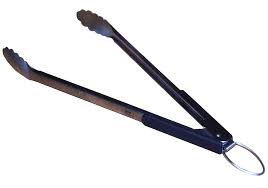
But why do we spell this:tongue but these: tongs?

Let's take tong first. We spell this as it sounds, like song, oblong, dongle.  Easy!

But tongue rhymes with hung (at least in my accent), so why the o and why the u?

To understand the o, look at some other words that use o when it sounds like u: come, some, love, monk etc. In the middle ages many written letters took the form of up and down strokes (called minims):


Can you identify these letters? (They don't make a word but they are in alphabetical order):

Quite tricky, isn't it? So if some and love were spelt as they sound they would look like this:

And if the word for the thing in your mouth was spelt tung, it would look like this:

The u and n are not so easy to read together. Compare it with :

So the monks, who were the ones who wrote in those days, replaced the u in some common words with o. It made it easier to read but more difficult to write!
Now, what about the u after the g in tongue? To find out about this I consulted my go-to etymology http://www.etymonline.com/ and read there:
website:

The spelling of the ending of the word apparently is a 14c. attempt to indicate proper pronunciation, but the result is "neither etymological nor phonetic, and is only in a very small degree historical" [OED].

So in other words, someone thought it would be easier to read the g in tongue correctly than it would be in tong or tung. We don't know why they thought this and, well, they were probably wrong (possibly right in their own accent), but we are now stuck with this spelling.

Anyway, guys, please don't touch the bread with your hands or tongues. Especially tongues!

Acknowledgements
The bread image has been circulating on social media but I couldn't find the original source I'm afraid.
The tongue image is from: https://upload.wikimedia.org/wikipedia/commons/thumb/7/7e/Face-tongue.svg/768px-Face-tongue.svg.png
The tongs image: https://upload.wikimedia.org/wikipedia/commons/1/15/Grilling-tongs.png
The monk image is from https://upload.wikimedia.org/wikipedia/commons/thumb/4/49/Medieval_writing_desk.jpg/602px-Medieval_writing_desk.jpg
The medieval writing is done with http://fontmeme.com/old-english-fonts/#none


Learning to spell Definitely

It's definately  defnetly certainly got to be one of the most misspelt words - definitely.

By the time you've read this post, you'll definitely never misspell it again. But how DO you learn those words that refuse to be learnt.

Here's my advice:

Don't rely on sound alone. Depending on your accent, this word definitely might sound a bit like "def-nut-lee". In fact you really can't hear how that vowel between n and t is spelt, so that's not going to help you. Going on sound alone it could be a, e, i, o or u.

Try more than one way to remember. At least one of them will work for you. And if you can use more than one of those methods, you can check that you're right.

Here are some ways to remember the spelling of definitely.

1) Build it up. This is my favourite way (and how I personally learnt to spell definitely).

finite  (easy to spell)
de + finite = definite
definite + ly = definitely

_______________

2) Think about the error you usually make (people often write this word with an 'a') and kill it!

There's definitely no 'a' in definitely.

_______________

3) Look at the shape. If you follow this blog you'll know I do a lot of work with word shapes. But they don't work so well with long words and not at all with vowels. So here's another way. Look at the combination of letters below. What does the overall shape remind you of? You might need to squint!
eiie

Does it look like a car? Or an armchair? Or something else? Remember those are the vowels in this word:
definitely

_______________

4) Play a game: how many words can you find in the word definitely? The letters must be consecutive not anagrams. So fin is fine but fit isn't.

definitely

_______________

5) Relate part of the spelling to part of another word that you can spell.

I've definitely finished

_______________

6) Colour your vowels. Decide on a colour for each vowel. For example:
a - grey
e - green
i - bright red
o  - yellow
u - blue
(the names of the letters sound like the colours)
Then write the word:
definitely
Download resources for coloured vowels here.

_______________

7) Check you've got it. Use my Look Say Cover Write and Check chart to test yourself. Download it from here: or read more about it here.

_______________

Got it? Any other ways to remember? Go ahead and share them.

"What Teachers Should Know About Spelling" article

I am grateful to Megan, an Australian follower of The Spelling Blog, for pointing me to this summary of what seems like a very interesting talk by Dr Misty Adoniou about teaching spelling. Her ideas are similar to mine in many ways but have some really interesting variations. To summarise the summary(!):

  • Phonics and visual skills are not the most important indicators of being a good speller
  • English is morpho-phonemic (based on meaning as well as sound) and etymology (word origin) plays a large part, so these two aspects should be explicitly taught across the curriculum (if taught in English, of course)
  • We need to teach 6 types of knowledge about words to spell them well: meaning, sound, acceptable and typical letter patterns, origins, parts of words and remembering what words look like.
  • We should teach spelling strategies through words that learners meet in context  in real books rather than having lists of words to learn that illustrate a strategy.

Thank you, Misty, Megan and Tina Williamson, the summary author. More about Misty Adoniou

Johanna

Aspire, Inspire and Expire - related meanings?

I saw this on my Facebook feed:
https://fbcdn-sphotos-g-a.akamaihd.net/hphotos-ak-ash4/1044294_204622203023918_1799367311_n.jpg

A neat little quote for teachers I thought. Then I couldn't help looking at those three spire words and wondering what they had in common in terms of meaning. So off to some of my favourite etymological websites (www.etymonline.com and wordinfo.info) and here's what I found and worked out. 

The root here is spire meaning breathe or breath life into  from the Latin spirare

  • aspire - to breathe life upon something- to have hope
  • inspire - to breathe or blow into another - in other words, "influence or animate with an idea or purpose" 
  • expire - breathe out, especially for the last time (so meaning die or finish) - spelling note: ex means out of but we can't put that before the whole word spire (exspire) because x is never followed by s except across a compound word such as flaxseed)

And here are some more spire words

  • conspire - literally breathe together, but means to plot something together
  • perspire - to breathe through. The sweat meaning came later but I suppose is about a kind of breathing through the skin.
  • respire - this literally means breathe again but I really don't know why it's again. I guess just one breath isn't enough to keep you alive!
The there are all the spirit words that are also related: spirited, spiritual, etc

But, by the way, the word spire itself, meaning a tall pointed tower, comes from a completely different root. It's related to an Old Norse word meaning a slender stalk

Love this etymology stuff! Feel free to add your own etymological 'noticings' in the comments.
Johanna