Showing posts with label improving your spelling. Show all posts

Tongues and tongs and medieval monks


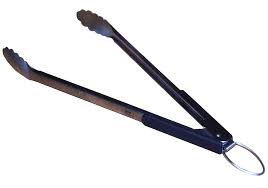
The picture above made me laugh. One of those times when you think, "Hmm...spelling really does matter sometimes".


But why do we spell this:tongue but these: tongs?

Let's take tong first. We spell this as it sounds, like song, oblong, dongle.  Easy!

But tongue rhymes with hung (at least in my accent), so why the o and why the u?

To understand the o, look at some other words that use o when it sounds like u: come, some, love, monk etc. In the middle ages many written letters took the form of up and down strokes (called minims):


Can you identify these letters? (They don't make a word but they are in alphabetical order):

Quite tricky, isn't it? So if some and love were spelt as they sound they would look like this:

And if the word for the thing in your mouth was spelt tung, it would look like this:

The u and n are not so easy to read together. Compare it with :

So the monks, who were the ones who wrote in those days, replaced the u in some common words with o. It made it easier to read but more difficult to write!
Now, what about the u after the g in tongue? To find out about this I consulted my go-to etymology http://www.etymonline.com/ and read there:
website:

The spelling of the ending of the word apparently is a 14c. attempt to indicate proper pronunciation, but the result is "neither etymological nor phonetic, and is only in a very small degree historical" [OED].

So in other words, someone thought it would be easier to read the g in tongue correctly than it would be in tong or tung. We don't know why they thought this and, well, they were probably wrong (possibly right in their own accent), but we are now stuck with this spelling.

Anyway, guys, please don't touch the bread with your hands or tongues. Especially tongues!

Acknowledgements
The bread image has been circulating on social media but I couldn't find the original source I'm afraid.
The tongue image is from: https://upload.wikimedia.org/wikipedia/commons/thumb/7/7e/Face-tongue.svg/768px-Face-tongue.svg.png
The tongs image: https://upload.wikimedia.org/wikipedia/commons/1/15/Grilling-tongs.png
The monk image is from https://upload.wikimedia.org/wikipedia/commons/thumb/4/49/Medieval_writing_desk.jpg/602px-Medieval_writing_desk.jpg
The medieval writing is done with http://fontmeme.com/old-english-fonts/#none


Chip, cheap, ship, sheep - remembering the spelling

Words that sound similar, especially to learners of English, can be a nightmare to spell.

A colleague in Algeria wrote that his young students mix up the spelling of the words chip, cheap, ship and sheep. If you're a native speaker of English you might think that the only problem here is the two different ways of spelling the long e sound in cheap and sheep. Otherwise the sounds tell you how to spell them, don't they?. But if you're a learner of English as a foreign language, you may well not be able to hear or produce the two different vowel sounds in ship and sheep. And the same difficulty is common with the different consonant sounds in ship and chip. So that's where phonics falls down for learners of English.

So let me try to help.

If we can't rely on sound for spelling these words, perhaps we can find something in the meaning to help. But that's usually easier with longer words. So I had to get a bit creative with these.


Linking the meaning with a photographic image of the letter.

Using synonyms to remember those two vowels
Using the word shape linked to the meaning 

Using drawn images to remember the vowels


You'll notice that:
  • there are lots of different ways to help learners remember
  • visual images stick in most people's memories
  • linking meaning with spelling gives learners a hook to hang the spelling on
  • this is a great way to differentiate between two (or more) similar words that cause spelling problems
  • I can't draw! It's true I'm rather embarrassed about these drawings - particularly those sheep! - but in fact here I think it's an advantage because it makes them funnier and it shows people (teachers and learners) that they don't have to be artists to be able to do this. I'm most certainly not!


Teachers! Parents! People who find spelling hard! 


I invite you to try it yourselves with words your learners / your children / you can't spell or confuse. 


Start by identifying the problem part in the word. Think about the whole word shape and think about the shape of those tricky letters, but always think about the meaning too and try to make a link. Can you make a visual link between the spelling and the meaning? 


Try out some different ideas - just the thinking and drawing will help memory, so it works best if the person who is having the spelling difficulty does it himself or herself or you do it together. The images can then be displayed as a reminder if necessary - but remove the display as soon as possible so the memory needs to do a bit of work. 


Please share your images with us in my Flickr group:  https://www.flickr.com/groups/spellingimages/


And please, feel free to tell others about this Flickr group, this blog, this idea and/or my Facebook page: https://www.facebook.com/thespellingpage

Looking forward to seeing your pictures!

Johanna
 .


Learning to spell Definitely

It's definately  defnetly certainly got to be one of the most misspelt words - definitely.

By the time you've read this post, you'll definitely never misspell it again. But how DO you learn those words that refuse to be learnt.

Here's my advice:

Don't rely on sound alone. Depending on your accent, this word definitely might sound a bit like "def-nut-lee". In fact you really can't hear how that vowel between n and t is spelt, so that's not going to help you. Going on sound alone it could be a, e, i, o or u.

Try more than one way to remember. At least one of them will work for you. And if you can use more than one of those methods, you can check that you're right.

Here are some ways to remember the spelling of definitely.

1) Build it up. This is my favourite way (and how I personally learnt to spell definitely).

finite  (easy to spell)
de + finite = definite
definite + ly = definitely

_______________

2) Think about the error you usually make (people often write this word with an 'a') and kill it!

There's definitely no 'a' in definitely.

_______________

3) Look at the shape. If you follow this blog you'll know I do a lot of work with word shapes. But they don't work so well with long words and not at all with vowels. So here's another way. Look at the combination of letters below. What does the overall shape remind you of? You might need to squint!
eiie

Does it look like a car? Or an armchair? Or something else? Remember those are the vowels in this word:
definitely

_______________

4) Play a game: how many words can you find in the word definitely? The letters must be consecutive not anagrams. So fin is fine but fit isn't.

definitely

_______________

5) Relate part of the spelling to part of another word that you can spell.

I've definitely finished

_______________

6) Colour your vowels. Decide on a colour for each vowel. For example:
a - grey
e - green
i - bright red
o  - yellow
u - blue
(the names of the letters sound like the colours)
Then write the word:
definitely
Download resources for coloured vowels here.

_______________

7) Check you've got it. Use my Look Say Cover Write and Check chart to test yourself. Download it from here: or read more about it here.

_______________

Got it? Any other ways to remember? Go ahead and share them.

Aspire, Inspire and Expire - related meanings?

I saw this on my Facebook feed:
https://fbcdn-sphotos-g-a.akamaihd.net/hphotos-ak-ash4/1044294_204622203023918_1799367311_n.jpg

A neat little quote for teachers I thought. Then I couldn't help looking at those three spire words and wondering what they had in common in terms of meaning. So off to some of my favourite etymological websites (www.etymonline.com and wordinfo.info) and here's what I found and worked out. 

The root here is spire meaning breathe or breath life into  from the Latin spirare

  • aspire - to breathe life upon something- to have hope
  • inspire - to breathe or blow into another - in other words, "influence or animate with an idea or purpose" 
  • expire - breathe out, especially for the last time (so meaning die or finish) - spelling note: ex means out of but we can't put that before the whole word spire (exspire) because x is never followed by s except across a compound word such as flaxseed)

And here are some more spire words

  • conspire - literally breathe together, but means to plot something together
  • perspire - to breathe through. The sweat meaning came later but I suppose is about a kind of breathing through the skin.
  • respire - this literally means breathe again but I really don't know why it's again. I guess just one breath isn't enough to keep you alive!
The there are all the spirit words that are also related: spirited, spiritual, etc

But, by the way, the word spire itself, meaning a tall pointed tower, comes from a completely different root. It's related to an Old Norse word meaning a slender stalk. 

Love this etymology stuff! Feel free to add your own etymological 'noticings' in the comments.
Johanna


Change y to i ... or change i to y?


Sometimes I find it's useful to turn things upside down. Looking at something in this different way prevents me from just accepting it the way I've always looked at it and makes me consider it more carefully, perhaps noticing things I hadn't seen before.

I like doing this with language 'rules' too. I want to check out for myself whether they are really reliable enough to be useful. I've certainly found some that weren't.

y to i
In English spelling, we often hear, "If a word ends with y, change it to i before adding a suffix". This is generally true but there are, of course, exceptions. If there is a vowel before the y, it doesn't usually change. And there are irregular instances such as say and said.

One of my posts was about letters not found at the end of native English words. It contained a PowerPoint presentation in it called Never-Ending Letters in which I identified i as one of those letters (except of course for the pronoun I). While I was writing it I noticed that it might be a good idea to turn this so-called 'rule' about y changing to i on its head - turn it upside down in other words.


i to y?
What if we said: "Don't write i at the end of a word - change it to y? In other words we're changing i to y (at the end of a word) instead of changing y to i (in the middle of a word). In a compound word we also keep the 'rule' about no i at the end of each part. As well as this, we need to change i to y before a suffix beginning with i, to avoid a double i like we get in the (non-native) word skiing.

So we write tries, tried and trial, but we can't write tri for the first form of the verb (because native English words don't end in i) so we spell it try. And we can't write triing, because we don't have double i, so trying.

Let's look at more examples, to test it out:
We write babies, but baby (end of word), babysit (compound word) and babyish (avoiding double i).
We write happier, happiest, happiness and happily, but happy (end of word), and happyish (avoiding double i).
We write reliable, reliance, and relied, but rely (end of word) and relying (avoiding double i).
We write beautiful, beautify and beautician, but beauty (end of word).
We write said, but say (end of word) and saying (avoiding double i).

OK, it works ... but I'm trying to decide if this is a better way to look at it or not. There are pros and cons.

Pros
There are fewer (if any) exceptions. As long as we are talking about native English words, they don't finish in i (except the pronoun I).
The fact that a vowel before a y stops it changing to i becomes irrelevant. If there's already a y, we don't need to change anything.

Cons
The base forms that end with y aren't usually the problem when it comes to spelling. It's the longer forms that are usually more tricky. These usually contain i.
When we teach, we usually start with base forms and later deal with inflections and suffixes.

My conclusion
Turning this rule on its head is probably more accurate and easier to understand but would involve teaching words in an unnatural order. So I probably wouldn't use it with low level students, but at a higher level, if students were having difficulty, I might well point it out.

So has this little experiment been a waste of time? No, I don't think so, because it's always useful to question what's generally accepted as true. Another perspective is always useful.

What do you think?
I would love to hear your comments on this.

Word endings - which letters are not at the end?

It's always easier to learn something if you know the reason for it. In the PowerPoint presentation below we see which letters are not usually found at the end of native English words and how this affects spelling.

Please feel free to use the PowerPoint as you like and share it widely. Just two rules:
  1. Please don't change anything in it (if there's anything that needs changing, please write and let me know) 
  2. Always link back to The Spelling Blog. Thank you.
The embedded version below doesn't have animations. You may think that's a good thing! But actually if you want to use the presentation for teaching it's better to have them - helps learners focus on new information better. So here's a version with simple, useful animations: http://dl.dropbox.com/u/9063559/Word%20endings.ppsx 

In the next blog post, I'm going to discuss something from the Never-Ending Letters presentation that I think is pretty revolutionary! Any idea what?

Anyway here it is. I hope it's useful. I'm really interested to hear any reactions (in the Comments below).

View more PowerPoint from jomango (that's me!)

Oh no! There was a mistake on the presentation. It's now been corrected so if you downloaded it on or before 28 March, please re-download. Sorry  - and thanks to my father for noticing!

Johanna

Improving spelling - never too late: the Jim Henry Story

Jim Henry's family didn't know he was illiterate and in his early 90's (yes, nineties!) he decided he wanted to learn to read and write. He not only achieved this dream but at 98 the lobster fisherman from Connecticut,USA has just written a book about his life. Read more here: http://m.smh.com.au/world/novel-approach-to-literacy-20111230-1pfiz.html

Wow! Pretty inspiring. And a story worth remembering when you think you're getting too old to sort something out.

Have you always felt that your spelling was not good enough? Is it time to do something about it? Try these tips:

1) Read what you enjoy and are comfortable with.

2) Write just a little bit each day. It doesn't have to be long but try to get it right by using a dictionary. Use a pen, but as you come across any words you're not 100% sure about, write these in pencil. Then check them. Or if you prefer to type, turn the Autocorrect off and type the words you're not sure about in a different colour.

3) Keep a notebook (paper or digital) of words you've looked up. Look through your notebooks sometimes and try to see patterns in spelling.

4) Try to learn why words are spelled as they are. Can you relate them to another word with similar meaning? Or look at http://www.etymonline.com/ to see where the word has come from.

5) Try to learn the spelling of words you need a lot or have big problems with. Use my Look Say Cover Write and Check chart: http://thespellingblog.blogspot.com/p/downloads.html or try this great program to help you: http://www.amblesideprimary.com/ambleweb/lookcover/lookcover.html

6) Explore and follow this blog.

7) Get help from a friend, family member or teacher. But make sure it's not someone who makes you feel bad about your spelling. Perhaps you can help them with something that they're not very good at in return - it makes for a more balanced relationship.

8) Remember if a man in his 90's can learn to read and write from scratch, there's no reason why you can't work on improving your spelling.

The tips above are very general. Much more throughout the blog.

Go for it!

Johanna

Spelling 'one' and 'two' - lexical spelling

I write this on a once-in-a-century day! The date is 11/11/11 - the only day in a hundred years when all those numbers are the same - lots of lovely ONEs. To celebrate and honour the number one, let's look at its spelling.

Learners have asked me "Why do you spell one without a w although you pronounce a w in it? And then why does two have a w when you don't pronounce it?" Great questions!

So why? The simple answer is that these two words are not phonetically spelled. Their spelling shows lexical or semantic links with other words - we are spelling by meaning not sound. All of the words below contain the letters o-n. Can you see how each of them relates to the idea of one?

Wordle: Untitled
one, alone, only, lonely, once, none

And how about two? (I'll deal with that now as I may not still be blogging on 22/2/22!) Where did that w come from? Again - it's about meaning not sound. What's the link with the number 2 in these words containing tw?

Wordle: two 2
two, twenty, twice, twelve, twin, between

Pointing this pattern out to learners can help prevent them writing *tow*, instead of two, and mixing the homophones. It also helps them to see there is some logic and that you shouldn't rely too much on sound when spelling.

Some questions for you:
  • Can you think of any more words related to the number one that include the letters on (together)?
  • And any more tw words related to the number two?
  • Do you know other sets of words in which the spelling can be learned by linking meanings rather than sound? (There are more in my book.)
Answers in the Comments please.

 Johanna


Improving spelling - whose responsibility is it?


Whose responsibility is it to see that an individual's spelling improves? Many people would say it is the teacher’s, but is it really possible to take responsibility for another person’s learning? We can do our very best to make the reasons clear, the subject engaging and the progress achievable, but the learner must take the ultimate responsibility for learning. 

Remember, you can lead a horse to water, tell it how refreshing the water is, tell a story about how the water got there, and play horsey games in the water ... but you can’t make it drink. If learners want to improve their spelling they will have to recognise that they are the agents of change.

To help learners to take responsibility for their own learning, we can try the following:

•         make it clear that we expect them to do so;
•         discuss the issues of motivation and self-study with them;
•         teach them spelling strategies that they can use;
•         provide opportunities for them to read more;
•         give them some choice in what and how they learn;
•         let them discover patterns rather than telling them;
•         make practice activities engaging and relevant;
•         show that we value the work they have done;
•         help them see their own progress - rather than compare it to the performance of others;
•         tell them that we can’t  and won’t try to force them to learn.

Learner autonomy is a complex issue and we may not succeed easily in getting some learners to take responsibility, but it’s certainly worth a try.

Lots of activities and techniques for doing the above in my book, Teaching Spelling to English Language Learners.

Anyway that's what I think. Do you agree?

Audience encourages accurate spelling

Learning to spell involves practice and the ultimate spelling practice is writing. A free writing task could just aim to get learners writing something (anything!) or it could encourage the use of words, spelling patterns or aspects of spelling that have recently been taught. Free writing, of course, practises much more than just spelling.

Ask the audience
But when learners write, who reads the writing? Very often the answer is just 'the teacher'. Is this audience of one really motivating enough? Why do students write? Often just because the teacher tells them to and so the teacher can judge them on their writing. One of the reasons I chose to to do the MA that I did was because the assignments were so practical,
  • Write an article for a journal about..., 
  • Create a website with these guidelines. 
  • Review a piece of teaching material for...
This meant that I could get most of my assignments published - they weren't only for the tutors' eyes - and build up my own professional profile. I found it much more motivating and I wanted them to impress more than one person. And why should it be any different for language learners? Having an audience, knowing somebody is going to read your words for its meaning (rather than just for its mistakes!) gives us much more ownership over our work and more pride in it. And if the audience respond (through comments etc), then that's terrific.

Glogs
I've found in my teaching that learners also make more effort if their work is going to be attractively presented. The quality the finished product becomes more important and stimulates more interest in the accuracy of the writing. One way to do this is to use webtools that package students' texts attractively. This could just be in a blog or wiki but I find one of the best tools for short pieces of writing is Glogster (www.glogster.com/). Glogster allows you to make digital posters (Glogs) which can include text, photos, videos and links, all on a range of backgrounds that you can choose. They can be as simple or jazzy as the user likes.

Greetings From the World
Glogster has been used to great effect in a fantastic award-winning project called Greetings from the World http://greetingsfromtheworld.wikispaces.com/, started by Arjana Blazic in Zagreb. In this project, groups of students in countries from all over the world - Singapore, Algeria, Spain, USA, Brazil, Sweden, Australia, India and more - make Glogs about their cities and countries. This has made a fascinating resource and a huge motivator for learners to write.

Collage of Glogs from http://greetingsfromtheworld.wikispaces.com/

To correct or not to correct?
One question that always vexes me when learners write online is how much I should correct them. One of the reasons I encourage them to write for a public audience is to encourage pride in their work. So I want them to want their work to be the best it can. We talk about this in class and I try to raise their expectations of their own work.

Unfortunately this can sometimes lead to plagiarism. Lazy students, or those who see the product as everything, sometimes think it's OK to just copy and paste something written in perfect English (from a guidebook for example). This needs stamping out - it is a complete waste of time and illegal. The teacher can use a plagiarism checker such as Dustball  http://www.dustball.com/cs/plagiarism.checker/ (which even works if the student has been 'clever' enough to change one or two words). Alternatively just type a suspiciously good sentence from the writing (between quotation marks "____") into Google . I let learners know beforehand that I will be checking for plagiarism and that any graded work that has been copied will be awarded a nice fat zero. I also teach them how not to plagiarise: If you read something you want to take ideas from, note key words, put away the text and then write it in your own words. Alternatively, quote from the material by using quotation marks and attribute the quotation carefully. If they quote directly, I like them to comment on the quote so they are also using their own words.

So how can teachers get learners to produce writing that is as accurate as they can manage without the learner losing the emotional and intellectual ownership of their work? Drafting, editing and redrafting are needed. The teacher can guide self-correction first (that's another blog post!), but I'm still undecided how much the teacher should actually correct the writing before it's posted on a public space for the world to see.

What do you think? Please leave comments.

Vowel patterns - Three in a Row Vowels Activity

Learners seem to have many more problems with spelling vowel sounds than consonant sounds. This isn't really surprising as English has only five vowel letters for about 20 vowel sounds, including diphthongs. (For consonants there are 21 letters and 24 different sounds, plus silence.) So vowels need to be used in combination (digraphs and trigraphs) to make certain sounds. Also, unstressed vowels are often pronounced with a schwa /É™/ (like the last syllable of teacher), regardless of the spelling. Added to this, some languages give much less importance to vowels - Arabic and Hebrew, for example - and learners may not realise the precision needed in English.

So, what to do? How can we help learners spell vowel sounds accurately? Here is just one activity from my book which helps learners to notice and practise vowel digraphs.

I hope you find it useful. Feedback always appreciated. 


22.4
Three in a Row Vowels

Aim: To give practice with vowel patterns. (See pages 131 and 135 of book for rationale)

Materials needed: Pencils. For each group of four learners: One game board — enlarged to A3 if possible; two different coloured sets of cards, also enlarged to A3 and cut - these are available on The Spelling Blog downloads page.

Activity:
1.       Learners work in groups of four (or up to six if necessary). Each group has two teams. Give each group two different coloured sets of vowel pattern cards — one for each of their teams. Also give them one game board. The cards are shuffled and placed in a pile, face down, in front of each team.

2.       One team turns up the first card. They make a word containing that vowel or pattern that matches one of the categories on the game board. They write the word in pencil under the pattern and place the card on the game board on top of the relevant category.

3.       The next team turns up one of their cards and does the same. The game continues until one team gets three cards in a row, horizontally, vertically or diagonally. So as well as trying to make a row of three, learners need to stop the opposing team from winning a row.

4.       To play again, learners need to rub out the words they have written on the cards.

Variations: Boards and cards can be laminated for reuse. Then learners write their words with a non-permanent pen (e.g. overhead projector pen) and these can be washed off after the game.
You may want to set a time limit for the creation of each word.
At the end of the game, everyone writes personalised sentences for the words they used to help them remember the spellings within a sentence.
For an easier version of this game, each team spreads out all their cards in front of them and they can choose the pattern they use to make a relevant word.
You could use this idea to make your own game with different spelling patterns or different topics.


Spelling Plants - Guest Post by David Warr

I'm really excited to have a guest blogger today! And such an amazing one! David Warr produces plants - language plants that show how language grows, how words are related and work together. These not only give wonderful visual clues to the langauge but are also delightful to look at and explore - some are so lovely you think they are going to be scented! You can see more of them on David's site ( http://www.languagegarden.org/ ) and in his extraordinary book.

Over to David...

I first met Johanna at IATEFL in Liverpool in 2004 Our websites share similar names, and it is right that non-botanical gardeners stick together. (My website is called Language Garden,  Johanna’s is an English specimen). I am a great admirer of Johanna and her work, and it is a pleasure and privilege to be invited to scatter a few seeds here today.

The Spelling Blog shows the need for treating spelling and the problems it causes with respect. Although we cannot assume that spelling will take care of itself, it can get pushed into corners and not given due attention. But, coupled with activities that promote speaking, thinking and creativity, spelling activities can easily slot into lessons as smoothly and as naturally as we might focus on the mispronunciation of a word. It’s another string to our bow.

The table in Johanna’s recent post http://thespellingblog.blogspot.com/2010/11/look-say-cover-write-check-template.html showed how we can focus on the different properties a word has. The columns that differentiate this table from the more common, but less focused Look-Say-Cover-Write-Check get learners to look at certain features of the word, of their choosing. This might be something unusual about the word, such as a rare spelling pattern that needs to be learned by heart, or the opposite - a spelling pattern that is common to many other words, and by learning to spell this one word, it opens the door to a number of others. Learning is about discovering and applying rules, and testing their boundaries. The trick is to find rules that are easy to remember, simple to apply and useful across a wide spectrum.

I commented on this post with a personal anecdote. My problem was that I could never remember how to spell questionnaire and millionaire. They both end in aire, but one n or two? I didn’t know. And eventually my patience snapped and I employed a personal technique which I will share with you here, called language plants.

These are a visual way of presenting language. They look for patterns and remove repetition and redundancy. Here is the one I made for the two words.


Ugly? Weird? Confusing? What adjectives come to mind?

Fascinating too, I’d say. Have you ever seen a solitary tree on a windswept cliff, so exposed to the prevailing gales that its branches are permanently distorted and bent? It’s its unusual but perfectly explainable and adapted form that is so spellbinding. Its shape is its essence.

I think the same is happening here. You see, this language plant is reflecting reality too. I learned that the two words do not follow the same rule. Millionaire has one n, but questionnaire has two. They’re different, and by sharing the letters they have in common, I’ve had to twist them all so that we can see both spellings at the same time. Look how the little green n that belongs to questionnaire is trying so hard to squeeze in between the other n and a. But millionaire is resisting. “You can’t come in,” it is admonishing, “you’re not part of me. Stay away!”

Colour helps too. Millionaire is grey, questionnaire is green. That’s why the intruding n is just green, while other letters are both grey and green. “We have no allegiance” they are announcing. “We belong to both,” they are confirming.

I thought I was satisfied.

Until the next time that is, when I had to spell one of them, I can’t recall which. Yet again, I had to reach for my weighty dictionary that owns a part of my desk. All I knew was that it could have one n or two. Ahh, but which? I had only solved half the problem. My quest was incomplete. Another language plant I needed.

“A millionaire has money!” True enough, but importantly here, these two words have just one n. The words are semantically and graphically related and the language plant shares on, so these letters are bigger. And this time I was satisfied.

All in all, I had invested mental energy, sifted through language, first in finding a word, money, that was related to one of the words, and then by creating the two images that presented the spelling patterns. This is another way of helping learners with spelling, a way that uses many intelligences and senses, not least visual, spatial and kinaesthetic, which is what Johanna’s table does so splendidly. And if you’ve got a rough piece of paper handy, you could try copying these out. Then next time you have to write either of these awkward words, well, hopefully your hard work will pay off.

Guest post by David Warr