Showing posts with label teaching spelling. Show all posts

Tongues and tongs and medieval monks


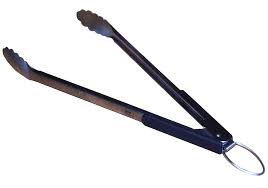
The picture above made me laugh. One of those times when you think, "Hmm...spelling really does matter sometimes".


But why do we spell this:tongue but these: tongs?

Let's take tong first. We spell this as it sounds, like song, oblong, dongle.  Easy!

But tongue rhymes with hung (at least in my accent), so why the o and why the u?

To understand the o, look at some other words that use o when it sounds like u: come, some, love, monk etc. In the middle ages many written letters took the form of up and down strokes (called minims):


Can you identify these letters? (They don't make a word but they are in alphabetical order):

Quite tricky, isn't it? So if some and love were spelt as they sound they would look like this:

And if the word for the thing in your mouth was spelt tung, it would look like this:

The u and n are not so easy to read together. Compare it with :

So the monks, who were the ones who wrote in those days, replaced the u in some common words with o. It made it easier to read but more difficult to write!
Now, what about the u after the g in tongue? To find out about this I consulted my go-to etymology http://www.etymonline.com/ and read there:
website:

The spelling of the ending of the word apparently is a 14c. attempt to indicate proper pronunciation, but the result is "neither etymological nor phonetic, and is only in a very small degree historical" [OED].

So in other words, someone thought it would be easier to read the g in tongue correctly than it would be in tong or tung. We don't know why they thought this and, well, they were probably wrong (possibly right in their own accent), but we are now stuck with this spelling.

Anyway, guys, please don't touch the bread with your hands or tongues. Especially tongues!

Acknowledgements
The bread image has been circulating on social media but I couldn't find the original source I'm afraid.
The tongue image is from: https://upload.wikimedia.org/wikipedia/commons/thumb/7/7e/Face-tongue.svg/768px-Face-tongue.svg.png
The tongs image: https://upload.wikimedia.org/wikipedia/commons/1/15/Grilling-tongs.png
The monk image is from https://upload.wikimedia.org/wikipedia/commons/thumb/4/49/Medieval_writing_desk.jpg/602px-Medieval_writing_desk.jpg
The medieval writing is done with http://fontmeme.com/old-english-fonts/#none


Chip, cheap, ship, sheep - remembering the spelling

Words that sound similar, especially to learners of English, can be a nightmare to spell.

A colleague in Algeria wrote that his young students mix up the spelling of the words chip, cheap, ship and sheep. If you're a native speaker of English you might think that the only problem here is the two different ways of spelling the long e sound in cheap and sheep. Otherwise the sounds tell you how to spell them, don't they?. But if you're a learner of English as a foreign language, you may well not be able to hear or produce the two different vowel sounds in ship and sheep. And the same difficulty is common with the different consonant sounds in ship and chip. So that's where phonics falls down for learners of English.

So let me try to help.

If we can't rely on sound for spelling these words, perhaps we can find something in the meaning to help. But that's usually easier with longer words. So I had to get a bit creative with these.


Linking the meaning with a photographic image of the letter.

Using synonyms to remember those two vowels
Using the word shape linked to the meaning 

Using drawn images to remember the vowels


You'll notice that:
  • there are lots of different ways to help learners remember
  • visual images stick in most people's memories
  • linking meaning with spelling gives learners a hook to hang the spelling on
  • this is a great way to differentiate between two (or more) similar words that cause spelling problems
  • I can't draw! It's true I'm rather embarrassed about these drawings - particularly those sheep! - but in fact here I think it's an advantage because it makes them funnier and it shows people (teachers and learners) that they don't have to be artists to be able to do this. I'm most certainly not!


Teachers! Parents! People who find spelling hard! 


I invite you to try it yourselves with words your learners / your children / you can't spell or confuse. 


Start by identifying the problem part in the word. Think about the whole word shape and think about the shape of those tricky letters, but always think about the meaning too and try to make a link. Can you make a visual link between the spelling and the meaning? 


Try out some different ideas - just the thinking and drawing will help memory, so it works best if the person who is having the spelling difficulty does it himself or herself or you do it together. The images can then be displayed as a reminder if necessary - but remove the display as soon as possible so the memory needs to do a bit of work. 


Please share your images with us in my Flickr group:  https://www.flickr.com/groups/spellingimages/


And please, feel free to tell others about this Flickr group, this blog, this idea and/or my Facebook page: https://www.facebook.com/thespellingpage

Looking forward to seeing your pictures!

Johanna
 .


Learning to spell Definitely

It's definately  defnetly certainly got to be one of the most misspelt words - definitely.

By the time you've read this post, you'll definitely never misspell it again. But how DO you learn those words that refuse to be learnt.

Here's my advice:

Don't rely on sound alone. Depending on your accent, this word definitely might sound a bit like "def-nut-lee". In fact you really can't hear how that vowel between n and t is spelt, so that's not going to help you. Going on sound alone it could be a, e, i, o or u.

Try more than one way to remember. At least one of them will work for you. And if you can use more than one of those methods, you can check that you're right.

Here are some ways to remember the spelling of definitely.

1) Build it up. This is my favourite way (and how I personally learnt to spell definitely).

finite  (easy to spell)
de + finite = definite
definite + ly = definitely

_______________

2) Think about the error you usually make (people often write this word with an 'a') and kill it!

There's definitely no 'a' in definitely.

_______________

3) Look at the shape. If you follow this blog you'll know I do a lot of work with word shapes. But they don't work so well with long words and not at all with vowels. So here's another way. Look at the combination of letters below. What does the overall shape remind you of? You might need to squint!
eiie

Does it look like a car? Or an armchair? Or something else? Remember those are the vowels in this word:
definitely

_______________

4) Play a game: how many words can you find in the word definitely? The letters must be consecutive not anagrams. So fin is fine but fit isn't.

definitely

_______________

5) Relate part of the spelling to part of another word that you can spell.

I've definitely finished

_______________

6) Colour your vowels. Decide on a colour for each vowel. For example:
a - grey
e - green
i - bright red
o  - yellow
u - blue
(the names of the letters sound like the colours)
Then write the word:
definitely
Download resources for coloured vowels here.

_______________

7) Check you've got it. Use my Look Say Cover Write and Check chart to test yourself. Download it from here: or read more about it here.

_______________

Got it? Any other ways to remember? Go ahead and share them.

"What Teachers Should Know About Spelling" article

I am grateful to Megan, an Australian follower of The Spelling Blog, for pointing me to this summary of what seems like a very interesting talk by Dr Misty Adoniou about teaching spelling. Her ideas are similar to mine in many ways but have some really interesting variations. To summarise the summary(!):

  • Phonics and visual skills are not the most important indicators of being a good speller
  • English is morpho-phonemic (based on meaning as well as sound) and etymology (word origin) plays a large part, so these two aspects should be explicitly taught across the curriculum (if taught in English, of course)
  • We need to teach 6 types of knowledge about words to spell them well: meaning, sound, acceptable and typical letter patterns, origins, parts of words and remembering what words look like.
  • We should teach spelling strategies through words that learners meet in context  in real books rather than having lists of words to learn that illustrate a strategy.

Thank you, Misty, Megan and Tina Williamson, the summary author. More about Misty Adoniou

Johanna

Aspire, Inspire and Expire - related meanings?

I saw this on my Facebook feed:
https://fbcdn-sphotos-g-a.akamaihd.net/hphotos-ak-ash4/1044294_204622203023918_1799367311_n.jpg

A neat little quote for teachers I thought. Then I couldn't help looking at those three spire words and wondering what they had in common in terms of meaning. So off to some of my favourite etymological websites (www.etymonline.com and wordinfo.info) and here's what I found and worked out. 

The root here is spire meaning breathe or breath life into  from the Latin spirare

  • aspire - to breathe life upon something- to have hope
  • inspire - to breathe or blow into another - in other words, "influence or animate with an idea or purpose" 
  • expire - breathe out, especially for the last time (so meaning die or finish) - spelling note: ex means out of but we can't put that before the whole word spire (exspire) because x is never followed by s except across a compound word such as flaxseed)

And here are some more spire words

  • conspire - literally breathe together, but means to plot something together
  • perspire - to breathe through. The sweat meaning came later but I suppose is about a kind of breathing through the skin.
  • respire - this literally means breathe again but I really don't know why it's again. I guess just one breath isn't enough to keep you alive!
The there are all the spirit words that are also related: spirited, spiritual, etc

But, by the way, the word spire itself, meaning a tall pointed tower, comes from a completely different root. It's related to an Old Norse word meaning a slender stalk. 

Love this etymology stuff! Feel free to add your own etymological 'noticings' in the comments.
Johanna


ELTons nomination for Teaching Spelling

Fantastic news! My book Teaching Spelling to English Language Learners has been nominated for an ELTon for Innovation in Teacher Resources.

If you are an English language teacher you may know (or may not) what that means. The ELTons are awards from the British Council and well ...  this is what the British Council say ...

"The ELTons, sponsored by Cambridge ESOL, are the only international awards that recognise and celebrate innovation in English language teaching (ELT). They reward educational resources that help English language learners and teachers to achieve their goals."

I'm so happy, proud and honoured that my self-published work is up there with the big guys. Full list of nominees here.
Really tough competition! The winners will be announced at the Oscars, sorry, I mean ELTons, ceremony in London on 22 May 2013. 

Special offer - 40% (or more if you hurry) discount
To celebrate, I'm reducing the price of Teaching Spelling until 22 April 2013. Only £11.10 (+ p and p) per book. Save £8.50 on RRP. But if you buy it before the end of 31 March you get an extra 20% off with the coupon code VERNUM. Only available when you buy from Lulu.com. Spread the word - bankrupt me!

Johanna


Change y to i ... or change i to y?


Sometimes I find it's useful to turn things upside down. Looking at something in this different way prevents me from just accepting it the way I've always looked at it and makes me consider it more carefully, perhaps noticing things I hadn't seen before.

I like doing this with language 'rules' too. I want to check out for myself whether they are really reliable enough to be useful. I've certainly found some that weren't.

y to i
In English spelling, we often hear, "If a word ends with y, change it to i before adding a suffix". This is generally true but there are, of course, exceptions. If there is a vowel before the y, it doesn't usually change. And there are irregular instances such as say and said.

One of my posts was about letters not found at the end of native English words. It contained a PowerPoint presentation in it called Never-Ending Letters in which I identified i as one of those letters (except of course for the pronoun I). While I was writing it I noticed that it might be a good idea to turn this so-called 'rule' about y changing to i on its head - turn it upside down in other words.


i to y?
What if we said: "Don't write i at the end of a word - change it to y? In other words we're changing i to y (at the end of a word) instead of changing y to i (in the middle of a word). In a compound word we also keep the 'rule' about no i at the end of each part. As well as this, we need to change i to y before a suffix beginning with i, to avoid a double i like we get in the (non-native) word skiing.

So we write tries, tried and trial, but we can't write tri for the first form of the verb (because native English words don't end in i) so we spell it try. And we can't write triing, because we don't have double i, so trying.

Let's look at more examples, to test it out:
We write babies, but baby (end of word), babysit (compound word) and babyish (avoiding double i).
We write happier, happiest, happiness and happily, but happy (end of word), and happyish (avoiding double i).
We write reliable, reliance, and relied, but rely (end of word) and relying (avoiding double i).
We write beautiful, beautify and beautician, but beauty (end of word).
We write said, but say (end of word) and saying (avoiding double i).

OK, it works ... but I'm trying to decide if this is a better way to look at it or not. There are pros and cons.

Pros
There are fewer (if any) exceptions. As long as we are talking about native English words, they don't finish in i (except the pronoun I).
The fact that a vowel before a y stops it changing to i becomes irrelevant. If there's already a y, we don't need to change anything.

Cons
The base forms that end with y aren't usually the problem when it comes to spelling. It's the longer forms that are usually more tricky. These usually contain i.
When we teach, we usually start with base forms and later deal with inflections and suffixes.

My conclusion
Turning this rule on its head is probably more accurate and easier to understand but would involve teaching words in an unnatural order. So I probably wouldn't use it with low level students, but at a higher level, if students were having difficulty, I might well point it out.

So has this little experiment been a waste of time? No, I don't think so, because it's always useful to question what's generally accepted as true. Another perspective is always useful.

What do you think?
I would love to hear your comments on this.

How to Teach English Spelling Facebook Chat

Quick bit of news: On Friday (1st June 2012) I'm joining the British Council Teaching English team on Facebook for a chat about guess what ... teaching spelling! Here's what they say on Facebook.

This week’s TeachingEnglish online chat will be tomorrow, Friday 11.00–12.00 (CST – Madrid time zone). We‘ll be talking about that infernal subject – how to teach English spelling – and I’m very happy to announce that Johanna Stirling will be coming along to help host the chat and answer your questions.
Johanna is a real expert in the field. She’s just brought out a new book, Teaching Spellinghttp://thespellingblog.blogspot.com.es/p/book-teaching-spelling.html and maintains a lively blog on the subjecthttp://thespellingblog.blogspot.com.es/
Hope you can join us tomorrow!
Check the world clock for what time it is in your time zone – Best, Ann
http://www.timeanddate.com/worldclock/full.html


That's 10.00 if you're in the UK. Don't forget to check the time if you're somewhere else

To join us go to: https://www.facebook.com/TeachingEnglish.BritishCouncil

I've never done this before, so hope I can keep up without making too many spelling mistakes ;-)

See you there.
Johanna

Is our spelling really getting worse?

I read so many people bemoaning the fact that our spelling is getting worse. And most seem to blame technology. I'm not sure that our knowledge of spelling is getting worse and I don't think technology is solely to blame if it is.

The fact is that we write far more than we ever used to (and I think that's a good thing!). And also much of what we write is for public consumption. So of course mistakes are seen more. We are also ridiculously 'busy' with constant distractions, so the main problem seems to be that we don't take time to check what we've written. Even people who are complaining about other people's spelling let themselves down. I read this today:
 "Myself, i HATE to see spelling errors in texts that are supposed to have been proff-read."
It's spell checkers that get singled out for most of the blame. I was sent an article on the subject today that I really want to respond to. So I'm going to!

You can read the article Technology Spell Check Leaves Many Adults Unable To Spell here or just read me ranting about it below.

The article starts off by claiming:
Technology has left many Britons unable to spell words like "definitely" and "separate", a survey has found. It suggests that the UK has produced an "auto-correct generation" that relies on computer spell checks. The poll, which questioned more than 2,000 adults, found that around a third could not spell "definitely" while a similar proportion failed to pick the right spelling of "separate". And around two thirds (65%) picked a wrong spelling for "necessary" from a list that did not include the right spelling.
First objection: Lots of people couldn't spell 'definitely' and 'separate' long before computers were around. I remember only learning to spell 'definitely' when I realised it contained the word 'finite'.

Second: spell checkers and auto-correct are different things. The spell checker warns you that you might have spelled something wrong and encourages you to think about what you meant to write but auto-correct just changes it for you if you've written a string of letters that people often write meaning something else.

Third: I don't like their 'poll'. Asking people to choose the correct spelling when it is surrounded by wrong but plausible spellings is asking for trouble. You might automatically write 'necessary' correctly in a sentence, but when someone offers you the choice of the word with two 'c's or one 's', it makes you stop and think that maybe you were wrong. It plants the seed of doubt. So that's bad enough but here the list didn't even include the right spelling, so it sounds like people were tricked. By the way if you can't remember how to spell the word 'necessary', remember "It's necessary to have one coat (one 'c') and two socks (two 's's)".

The article goes on:
And many people are relying on spell checks - 18% said they use this all the time. Fewer than one in 10 (9%) said they never use a spell check.
Umm ... what's wrong with using a spell check? I use one all the time too. It's a good strategy to catch your typos and words you're not sure about. In fact, what worried me about this was that 82% don't use one all the time. Try it, folks, you'll like it.

Sure there are people who can't spell well - lots of them - and it's a problem. But is it really getting worse or just more obvious? Whichever, I offer two suggestions:

1) Let's not teach children that English is spelled as it sounds (phonics) as more than 50% of it isn't. Yes, they need to learn sound-to-letter correspondences, but they also need to learn about the origins of words and look at a range of strategies for coping with the complexity that is English spelling. (See Teaching Spelling to English Language Learners for ways to do this.)

2) We should all (myself included) train ourselves to pause and check what we've written before pressing the Send button. And again we need more focus on this at school - editing.

So what about you?

  • Do you agree with me?
  • Do you have any proof that spelling has really got worse?
  • How do you feel about spell checkers?
  • And auto-correct?
  • And phonics?


Word endings - which letters are not at the end?

It's always easier to learn something if you know the reason for it. In the PowerPoint presentation below we see which letters are not usually found at the end of native English words and how this affects spelling.

Please feel free to use the PowerPoint as you like and share it widely. Just two rules:
  1. Please don't change anything in it (if there's anything that needs changing, please write and let me know) 
  2. Always link back to The Spelling Blog. Thank you.
The embedded version below doesn't have animations. You may think that's a good thing! But actually if you want to use the presentation for teaching it's better to have them - helps learners focus on new information better. So here's a version with simple, useful animations: http://dl.dropbox.com/u/9063559/Word%20endings.ppsx 

In the next blog post, I'm going to discuss something from the Never-Ending Letters presentation that I think is pretty revolutionary! Any idea what?

Anyway here it is. I hope it's useful. I'm really interested to hear any reactions (in the Comments below).

View more PowerPoint from jomango (that's me!)

Oh no! There was a mistake on the presentation. It's now been corrected so if you downloaded it on or before 28 March, please re-download. Sorry  - and thanks to my father for noticing!

Johanna

Spelling 'one' and 'two' - lexical spelling

I write this on a once-in-a-century day! The date is 11/11/11 - the only day in a hundred years when all those numbers are the same - lots of lovely ONEs. To celebrate and honour the number one, let's look at its spelling.

Learners have asked me "Why do you spell one without a w although you pronounce a w in it? And then why does two have a w when you don't pronounce it?" Great questions!

So why? The simple answer is that these two words are not phonetically spelled. Their spelling shows lexical or semantic links with other words - we are spelling by meaning not sound. All of the words below contain the letters o-n. Can you see how each of them relates to the idea of one?

Wordle: Untitled
one, alone, only, lonely, once, none

And how about two? (I'll deal with that now as I may not still be blogging on 22/2/22!) Where did that w come from? Again - it's about meaning not sound. What's the link with the number 2 in these words containing tw?

Wordle: two 2
two, twenty, twice, twelve, twin, between

Pointing this pattern out to learners can help prevent them writing *tow*, instead of two, and mixing the homophones. It also helps them to see there is some logic and that you shouldn't rely too much on sound when spelling.

Some questions for you:
  • Can you think of any more words related to the number one that include the letters on (together)?
  • And any more tw words related to the number two?
  • Do you know other sets of words in which the spelling can be learned by linking meanings rather than sound? (There are more in my book.)
Answers in the Comments please.

 Johanna


Back to school - spelling rescue strategies

I want to wish teachers who return to school around now all the best with their new classes. Hopefully you're refreshed after the summer holidays and raring to go! It's the time when I always make resolutions (more logical for teachers than January). Do you?

So, is this the year that you're determined to help out those learners who are really struggling with English spelling? If so, what can you do to really help them make progress?

Here are 6 ideas:
  1. Emphasise the positive! Avoid reinforcing the idea that English spelling is chaotic and unlearnable. Instead show links. Ask questions like:
    • Can you think of other words with a similar spelling? Are they similar in meaning?
    • Why do you think it's spelled like this?
  2. Make spelling as visual as you can. Help learners visualise words and their shapes. Good spellers can 'see' words in their heads. Weak spellers need help with this.
  3. Remember testing isn't the same as teaching -  consider testing less and teaching, reading and writing more.
  4. Teach or remind learners about strategies for learning difficult spellings. Use the Look Say Cover Write and Check chart at http://thespellingblog.blogspot.com/p/downloads.html
  5. Correct spelling mistakes in such a way that students can learn from your corrections. Copy the correct letters they have written, with dashes for the letters that are wrong.
  6. Make spelling practice fun and mentally engaging. Help break down fear of words that may have built up from previous negative experiences.
To help you, and give you loads more ideas, I've put a 20% discount on my book - Teaching Spelling to English Language Learners - for a few weeks only. To get it at this price (only £14.80 + postage) you need to go to http://www.lulu.com/product/paperback/teaching-spelling-to-english-language-learners/15361505. The book is also available from Amazon.co.uk at http://www.amazon.co.uk/Teaching-Spelling-English-Language-Learners/dp/1447606787 or Amazon.com http://www.amazon.com/Teaching-Spelling-English-Language-Learners/dp/1447606787 .

Have a happy and rewarding year!

Improving spelling - whose responsibility is it?


Whose responsibility is it to see that an individual's spelling improves? Many people would say it is the teacher’s, but is it really possible to take responsibility for another person’s learning? We can do our very best to make the reasons clear, the subject engaging and the progress achievable, but the learner must take the ultimate responsibility for learning. 

Remember, you can lead a horse to water, tell it how refreshing the water is, tell a story about how the water got there, and play horsey games in the water ... but you can’t make it drink. If learners want to improve their spelling they will have to recognise that they are the agents of change.

To help learners to take responsibility for their own learning, we can try the following:

•         make it clear that we expect them to do so;
•         discuss the issues of motivation and self-study with them;
•         teach them spelling strategies that they can use;
•         provide opportunities for them to read more;
•         give them some choice in what and how they learn;
•         let them discover patterns rather than telling them;
•         make practice activities engaging and relevant;
•         show that we value the work they have done;
•         help them see their own progress - rather than compare it to the performance of others;
•         tell them that we can’t  and won’t try to force them to learn.

Learner autonomy is a complex issue and we may not succeed easily in getting some learners to take responsibility, but it’s certainly worth a try.

Lots of activities and techniques for doing the above in my book, Teaching Spelling to English Language Learners.

Anyway that's what I think. Do you agree?

Should spell-checkers be allowed in tests?

There has been recent debate about whether spell-checkers should be used in tests. Should they?

Well, for me it depends what the test is testing. If it is testing knowledge of specific spelling patterns, the spell-check would defeat the object of the test. But if the aim is to test a learner's general writing skills or content knowledge, I would say yes, let them use one. If learners are living a life where they will be doing most of their writing electronically, this is what they need to be able to do - write accurate and expressive text, using all resources (internal and external) available to them.

Those who object to the use of spell-checkers in tests are forgetting that you have to be a halfway decent speller anyway to be able to use a spell-checker. Your attempt has to be close enough to be recognised by the software and where there is an option, you have to be able to choose the right one. You also have to cope with homophones and other real-word errors on your own. See http://thespellingblog.blogspot.com/2009/09/spell-checkers-how-useful-are-they.html for more on spell-checkers and an activity to train learners to use them well.

Allowing spell-checkers in tests doesn't mean you don't need to teach or correct spelling in classwork and homework, of course.

Why not allow spell-checkers in tests but be more demanding about accurate spelling? After all they are getting more help.


To me, Autocorrect is much more worrying. This corrects your spelling automatically without you noticing it. So there is no opportunity to learn. I blame Autocorrect for the fact that I always spell 'the' as 'teh' because I got away with it for years and now the muscle memory is so established that I can't do anything about it (believe me I've tried!). Autocorrect was also a nightmare when I was writing my book (Teaching Spelling to English Language Learners) because every time I gave an example of an error Autocorrect kindly 'corrected' it for me! Yes, I know I could turn it off, but then what about all the 'teh's?

Anyway, back to the subject, should spell-checkers be allowed in tests? I would love to hear your comments.

Johanna

ps Just ran a spell-check on this post in Blogger. I'd written 'anyting' instead of 'anything'. This is what the spell-check suggested: 'any ting', 'anting', 'anteing', 'Antin'! Thanks Blogger, really helpful - not! Luckily all spell-checkers are not equal!

Audience encourages accurate spelling

Learning to spell involves practice and the ultimate spelling practice is writing. A free writing task could just aim to get learners writing something (anything!) or it could encourage the use of words, spelling patterns or aspects of spelling that have recently been taught. Free writing, of course, practises much more than just spelling.

Ask the audience
But when learners write, who reads the writing? Very often the answer is just 'the teacher'. Is this audience of one really motivating enough? Why do students write? Often just because the teacher tells them to and so the teacher can judge them on their writing. One of the reasons I chose to to do the MA that I did was because the assignments were so practical,
  • Write an article for a journal about..., 
  • Create a website with these guidelines. 
  • Review a piece of teaching material for...
This meant that I could get most of my assignments published - they weren't only for the tutors' eyes - and build up my own professional profile. I found it much more motivating and I wanted them to impress more than one person. And why should it be any different for language learners? Having an audience, knowing somebody is going to read your words for its meaning (rather than just for its mistakes!) gives us much more ownership over our work and more pride in it. And if the audience respond (through comments etc), then that's terrific.

Glogs
I've found in my teaching that learners also make more effort if their work is going to be attractively presented. The quality the finished product becomes more important and stimulates more interest in the accuracy of the writing. One way to do this is to use webtools that package students' texts attractively. This could just be in a blog or wiki but I find one of the best tools for short pieces of writing is Glogster (www.glogster.com/). Glogster allows you to make digital posters (Glogs) which can include text, photos, videos and links, all on a range of backgrounds that you can choose. They can be as simple or jazzy as the user likes.

Greetings From the World
Glogster has been used to great effect in a fantastic award-winning project called Greetings from the World http://greetingsfromtheworld.wikispaces.com/, started by Arjana Blazic in Zagreb. In this project, groups of students in countries from all over the world - Singapore, Algeria, Spain, USA, Brazil, Sweden, Australia, India and more - make Glogs about their cities and countries. This has made a fascinating resource and a huge motivator for learners to write.

Collage of Glogs from http://greetingsfromtheworld.wikispaces.com/

To correct or not to correct?
One question that always vexes me when learners write online is how much I should correct them. One of the reasons I encourage them to write for a public audience is to encourage pride in their work. So I want them to want their work to be the best it can. We talk about this in class and I try to raise their expectations of their own work.

Unfortunately this can sometimes lead to plagiarism. Lazy students, or those who see the product as everything, sometimes think it's OK to just copy and paste something written in perfect English (from a guidebook for example). This needs stamping out - it is a complete waste of time and illegal. The teacher can use a plagiarism checker such as Dustball  http://www.dustball.com/cs/plagiarism.checker/ (which even works if the student has been 'clever' enough to change one or two words). Alternatively just type a suspiciously good sentence from the writing (between quotation marks "____") into Google . I let learners know beforehand that I will be checking for plagiarism and that any graded work that has been copied will be awarded a nice fat zero. I also teach them how not to plagiarise: If you read something you want to take ideas from, note key words, put away the text and then write it in your own words. Alternatively, quote from the material by using quotation marks and attribute the quotation carefully. If they quote directly, I like them to comment on the quote so they are also using their own words.

So how can teachers get learners to produce writing that is as accurate as they can manage without the learner losing the emotional and intellectual ownership of their work? Drafting, editing and redrafting are needed. The teacher can guide self-correction first (that's another blog post!), but I'm still undecided how much the teacher should actually correct the writing before it's posted on a public space for the world to see.

What do you think? Please leave comments.

Full-Body Spelling Workout at IATEFL

At the IATEFL Conference in Brighton (England) this year I led a workshop called  

Full-Body Spelling Workout 

This focused on kinaesthetic routes to teaching spelling. The lovely people at IATEFL videoed my session and have posted it here on the Brighton Online website

But you can also watch it below. It's about 45 minutes long.


It was wonderful to meet so many people at IATEFL. A special thank you to those who came to my workshop. For me this year's IATEFL was the most enjoyable and useful one ever. If you weren't able to attend you can watch lots of sessions here.

Vowel patterns - Three in a Row Vowels Activity

Learners seem to have many more problems with spelling vowel sounds than consonant sounds. This isn't really surprising as English has only five vowel letters for about 20 vowel sounds, including diphthongs. (For consonants there are 21 letters and 24 different sounds, plus silence.) So vowels need to be used in combination (digraphs and trigraphs) to make certain sounds. Also, unstressed vowels are often pronounced with a schwa /É™/ (like the last syllable of teacher), regardless of the spelling. Added to this, some languages give much less importance to vowels - Arabic and Hebrew, for example - and learners may not realise the precision needed in English.

So, what to do? How can we help learners spell vowel sounds accurately? Here is just one activity from my book which helps learners to notice and practise vowel digraphs.

I hope you find it useful. Feedback always appreciated. 


22.4
Three in a Row Vowels

Aim: To give practice with vowel patterns. (See pages 131 and 135 of book for rationale)

Materials needed: Pencils. For each group of four learners: One game board — enlarged to A3 if possible; two different coloured sets of cards, also enlarged to A3 and cut - these are available on The Spelling Blog downloads page.

Activity:
1.       Learners work in groups of four (or up to six if necessary). Each group has two teams. Give each group two different coloured sets of vowel pattern cards — one for each of their teams. Also give them one game board. The cards are shuffled and placed in a pile, face down, in front of each team.

2.       One team turns up the first card. They make a word containing that vowel or pattern that matches one of the categories on the game board. They write the word in pencil under the pattern and place the card on the game board on top of the relevant category.

3.       The next team turns up one of their cards and does the same. The game continues until one team gets three cards in a row, horizontally, vertically or diagonally. So as well as trying to make a row of three, learners need to stop the opposing team from winning a row.

4.       To play again, learners need to rub out the words they have written on the cards.

Variations: Boards and cards can be laminated for reuse. Then learners write their words with a non-permanent pen (e.g. overhead projector pen) and these can be washed off after the game.
You may want to set a time limit for the creation of each word.
At the end of the game, everyone writes personalised sentences for the words they used to help them remember the spellings within a sentence.
For an easier version of this game, each team spreads out all their cards in front of them and they can choose the pattern they use to make a relevant word.
You could use this idea to make your own game with different spelling patterns or different topics.