Showing posts with label spelling. Show all posts

Tongues and tongs and medieval monks


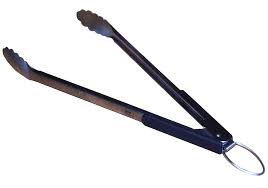
The picture above made me laugh. One of those times when you think, "Hmm...spelling really does matter sometimes".


But why do we spell this:tongue but these: tongs?

Let's take tong first. We spell this as it sounds, like song, oblong, dongle.  Easy!

But tongue rhymes with hung (at least in my accent), so why the o and why the u?

To understand the o, look at some other words that use o when it sounds like u: come, some, love, monk etc. In the middle ages many written letters took the form of up and down strokes (called minims):


Can you identify these letters? (They don't make a word but they are in alphabetical order):

Quite tricky, isn't it? So if some and love were spelt as they sound they would look like this:

And if the word for the thing in your mouth was spelt tung, it would look like this:

The u and n are not so easy to read together. Compare it with :

So the monks, who were the ones who wrote in those days, replaced the u in some common words with o. It made it easier to read but more difficult to write!
Now, what about the u after the g in tongue? To find out about this I consulted my go-to etymology http://www.etymonline.com/ and read there:
website:

The spelling of the ending of the word apparently is a 14c. attempt to indicate proper pronunciation, but the result is "neither etymological nor phonetic, and is only in a very small degree historical" [OED].

So in other words, someone thought it would be easier to read the g in tongue correctly than it would be in tong or tung. We don't know why they thought this and, well, they were probably wrong (possibly right in their own accent), but we are now stuck with this spelling.

Anyway, guys, please don't touch the bread with your hands or tongues. Especially tongues!

Acknowledgements
The bread image has been circulating on social media but I couldn't find the original source I'm afraid.
The tongue image is from: https://upload.wikimedia.org/wikipedia/commons/thumb/7/7e/Face-tongue.svg/768px-Face-tongue.svg.png
The tongs image: https://upload.wikimedia.org/wikipedia/commons/1/15/Grilling-tongs.png
The monk image is from https://upload.wikimedia.org/wikipedia/commons/thumb/4/49/Medieval_writing_desk.jpg/602px-Medieval_writing_desk.jpg
The medieval writing is done with http://fontmeme.com/old-english-fonts/#none


Chip, cheap, ship, sheep - remembering the spelling

Words that sound similar, especially to learners of English, can be a nightmare to spell.

A colleague in Algeria wrote that his young students mix up the spelling of the words chip, cheap, ship and sheep. If you're a native speaker of English you might think that the only problem here is the two different ways of spelling the long e sound in cheap and sheep. Otherwise the sounds tell you how to spell them, don't they?. But if you're a learner of English as a foreign language, you may well not be able to hear or produce the two different vowel sounds in ship and sheep. And the same difficulty is common with the different consonant sounds in ship and chip. So that's where phonics falls down for learners of English.

So let me try to help.

If we can't rely on sound for spelling these words, perhaps we can find something in the meaning to help. But that's usually easier with longer words. So I had to get a bit creative with these.


Linking the meaning with a photographic image of the letter.

Using synonyms to remember those two vowels
Using the word shape linked to the meaning 

Using drawn images to remember the vowels


You'll notice that:
  • there are lots of different ways to help learners remember
  • visual images stick in most people's memories
  • linking meaning with spelling gives learners a hook to hang the spelling on
  • this is a great way to differentiate between two (or more) similar words that cause spelling problems
  • I can't draw! It's true I'm rather embarrassed about these drawings - particularly those sheep! - but in fact here I think it's an advantage because it makes them funnier and it shows people (teachers and learners) that they don't have to be artists to be able to do this. I'm most certainly not!


Teachers! Parents! People who find spelling hard! 


I invite you to try it yourselves with words your learners / your children / you can't spell or confuse. 


Start by identifying the problem part in the word. Think about the whole word shape and think about the shape of those tricky letters, but always think about the meaning too and try to make a link. Can you make a visual link between the spelling and the meaning? 


Try out some different ideas - just the thinking and drawing will help memory, so it works best if the person who is having the spelling difficulty does it himself or herself or you do it together. The images can then be displayed as a reminder if necessary - but remove the display as soon as possible so the memory needs to do a bit of work. 


Please share your images with us in my Flickr group:  https://www.flickr.com/groups/spellingimages/


And please, feel free to tell others about this Flickr group, this blog, this idea and/or my Facebook page: https://www.facebook.com/thespellingpage

Looking forward to seeing your pictures!

Johanna
 .


Learning to spell Definitely

It's definately  defnetly certainly got to be one of the most misspelt words - definitely.

By the time you've read this post, you'll definitely never misspell it again. But how DO you learn those words that refuse to be learnt.

Here's my advice:

Don't rely on sound alone. Depending on your accent, this word definitely might sound a bit like "def-nut-lee". In fact you really can't hear how that vowel between n and t is spelt, so that's not going to help you. Going on sound alone it could be a, e, i, o or u.

Try more than one way to remember. At least one of them will work for you. And if you can use more than one of those methods, you can check that you're right.

Here are some ways to remember the spelling of definitely.

1) Build it up. This is my favourite way (and how I personally learnt to spell definitely).

finite  (easy to spell)
de + finite = definite
definite + ly = definitely

_______________

2) Think about the error you usually make (people often write this word with an 'a') and kill it!

There's definitely no 'a' in definitely.

_______________

3) Look at the shape. If you follow this blog you'll know I do a lot of work with word shapes. But they don't work so well with long words and not at all with vowels. So here's another way. Look at the combination of letters below. What does the overall shape remind you of? You might need to squint!
eiie

Does it look like a car? Or an armchair? Or something else? Remember those are the vowels in this word:
definitely

_______________

4) Play a game: how many words can you find in the word definitely? The letters must be consecutive not anagrams. So fin is fine but fit isn't.

definitely

_______________

5) Relate part of the spelling to part of another word that you can spell.

I've definitely finished

_______________

6) Colour your vowels. Decide on a colour for each vowel. For example:
a - grey
e - green
i - bright red
o  - yellow
u - blue
(the names of the letters sound like the colours)
Then write the word:
definitely
Download resources for coloured vowels here.

_______________

7) Check you've got it. Use my Look Say Cover Write and Check chart to test yourself. Download it from here: or read more about it here.

_______________

Got it? Any other ways to remember? Go ahead and share them.

"What Teachers Should Know About Spelling" article

I am grateful to Megan, an Australian follower of The Spelling Blog, for pointing me to this summary of what seems like a very interesting talk by Dr Misty Adoniou about teaching spelling. Her ideas are similar to mine in many ways but have some really interesting variations. To summarise the summary(!):

  • Phonics and visual skills are not the most important indicators of being a good speller
  • English is morpho-phonemic (based on meaning as well as sound) and etymology (word origin) plays a large part, so these two aspects should be explicitly taught across the curriculum (if taught in English, of course)
  • We need to teach 6 types of knowledge about words to spell them well: meaning, sound, acceptable and typical letter patterns, origins, parts of words and remembering what words look like.
  • We should teach spelling strategies through words that learners meet in context  in real books rather than having lists of words to learn that illustrate a strategy.

Thank you, Misty, Megan and Tina Williamson, the summary author. More about Misty Adoniou

Johanna

ELTons nomination for Teaching Spelling

Fantastic news! My book Teaching Spelling to English Language Learners has been nominated for an ELTon for Innovation in Teacher Resources.

If you are an English language teacher you may know (or may not) what that means. The ELTons are awards from the British Council and well ...  this is what the British Council say ...

"The ELTons, sponsored by Cambridge ESOL, are the only international awards that recognise and celebrate innovation in English language teaching (ELT). They reward educational resources that help English language learners and teachers to achieve their goals."

I'm so happy, proud and honoured that my self-published work is up there with the big guys. Full list of nominees here.
Really tough competition! The winners will be announced at the Oscars, sorry, I mean ELTons, ceremony in London on 22 May 2013. 

Special offer - 40% (or more if you hurry) discount
To celebrate, I'm reducing the price of Teaching Spelling until 22 April 2013. Only £11.10 (+ p and p) per book. Save £8.50 on RRP. But if you buy it before the end of 31 March you get an extra 20% off with the coupon code VERNUM. Only available when you buy from Lulu.com. Spread the word - bankrupt me!

Johanna


Change y to i ... or change i to y?


Sometimes I find it's useful to turn things upside down. Looking at something in this different way prevents me from just accepting it the way I've always looked at it and makes me consider it more carefully, perhaps noticing things I hadn't seen before.

I like doing this with language 'rules' too. I want to check out for myself whether they are really reliable enough to be useful. I've certainly found some that weren't.

y to i
In English spelling, we often hear, "If a word ends with y, change it to i before adding a suffix". This is generally true but there are, of course, exceptions. If there is a vowel before the y, it doesn't usually change. And there are irregular instances such as say and said.

One of my posts was about letters not found at the end of native English words. It contained a PowerPoint presentation in it called Never-Ending Letters in which I identified i as one of those letters (except of course for the pronoun I). While I was writing it I noticed that it might be a good idea to turn this so-called 'rule' about y changing to i on its head - turn it upside down in other words.


i to y?
What if we said: "Don't write i at the end of a word - change it to y? In other words we're changing i to y (at the end of a word) instead of changing y to i (in the middle of a word). In a compound word we also keep the 'rule' about no i at the end of each part. As well as this, we need to change i to y before a suffix beginning with i, to avoid a double i like we get in the (non-native) word skiing.

So we write tries, tried and trial, but we can't write tri for the first form of the verb (because native English words don't end in i) so we spell it try. And we can't write triing, because we don't have double i, so trying.

Let's look at more examples, to test it out:
We write babies, but baby (end of word), babysit (compound word) and babyish (avoiding double i).
We write happier, happiest, happiness and happily, but happy (end of word), and happyish (avoiding double i).
We write reliable, reliance, and relied, but rely (end of word) and relying (avoiding double i).
We write beautiful, beautify and beautician, but beauty (end of word).
We write said, but say (end of word) and saying (avoiding double i).

OK, it works ... but I'm trying to decide if this is a better way to look at it or not. There are pros and cons.

Pros
There are fewer (if any) exceptions. As long as we are talking about native English words, they don't finish in i (except the pronoun I).
The fact that a vowel before a y stops it changing to i becomes irrelevant. If there's already a y, we don't need to change anything.

Cons
The base forms that end with y aren't usually the problem when it comes to spelling. It's the longer forms that are usually more tricky. These usually contain i.
When we teach, we usually start with base forms and later deal with inflections and suffixes.

My conclusion
Turning this rule on its head is probably more accurate and easier to understand but would involve teaching words in an unnatural order. So I probably wouldn't use it with low level students, but at a higher level, if students were having difficulty, I might well point it out.

So has this little experiment been a waste of time? No, I don't think so, because it's always useful to question what's generally accepted as true. Another perspective is always useful.

What do you think?
I would love to hear your comments on this.

Ya gonna wanna sorta luv this - non-standard spelling surprise

I wanna look at some 'non-standard' spellings. I'm gonna surprise ya wiv some information about dem. I dunno about u but I thought these spellings were sorta new, from the sixties maybe. But I gotta tell ya, they've been around a long, long time. Ya might not believe me, but it must be true cos I read in it David Crystal's book, which I luv by the way, called The Story of English in 100 Words. He tells us when these words first made it into the dictionaries as 'alternative' spellings cos they were used so frequently:
  • wanna   -   1896
  • gonna    -   1913
  • ya         -   1941    
  • wiv       -   1898
  • dunno   -   1842
  • sorta     -   1790 (yes, really!)
  • gotta     -   1924
  • cos       -   1828
  • luv        -   1898
And look at this:
An S A now I mean 2 write
2 U sweet K T J 
The beginning of a poem called "An Essay to Miss Catherine Jay" by an anonymous author in 1875.
 
Great to see how the young people of today are reviving old spellings!


Johanna

Is our spelling really getting worse?

I read so many people bemoaning the fact that our spelling is getting worse. And most seem to blame technology. I'm not sure that our knowledge of spelling is getting worse and I don't think technology is solely to blame if it is.

The fact is that we write far more than we ever used to (and I think that's a good thing!). And also much of what we write is for public consumption. So of course mistakes are seen more. We are also ridiculously 'busy' with constant distractions, so the main problem seems to be that we don't take time to check what we've written. Even people who are complaining about other people's spelling let themselves down. I read this today:
 "Myself, i HATE to see spelling errors in texts that are supposed to have been proff-read."
It's spell checkers that get singled out for most of the blame. I was sent an article on the subject today that I really want to respond to. So I'm going to!

You can read the article Technology Spell Check Leaves Many Adults Unable To Spell here or just read me ranting about it below.

The article starts off by claiming:
Technology has left many Britons unable to spell words like "definitely" and "separate", a survey has found. It suggests that the UK has produced an "auto-correct generation" that relies on computer spell checks. The poll, which questioned more than 2,000 adults, found that around a third could not spell "definitely" while a similar proportion failed to pick the right spelling of "separate". And around two thirds (65%) picked a wrong spelling for "necessary" from a list that did not include the right spelling.
First objection: Lots of people couldn't spell 'definitely' and 'separate' long before computers were around. I remember only learning to spell 'definitely' when I realised it contained the word 'finite'.

Second: spell checkers and auto-correct are different things. The spell checker warns you that you might have spelled something wrong and encourages you to think about what you meant to write but auto-correct just changes it for you if you've written a string of letters that people often write meaning something else.

Third: I don't like their 'poll'. Asking people to choose the correct spelling when it is surrounded by wrong but plausible spellings is asking for trouble. You might automatically write 'necessary' correctly in a sentence, but when someone offers you the choice of the word with two 'c's or one 's', it makes you stop and think that maybe you were wrong. It plants the seed of doubt. So that's bad enough but here the list didn't even include the right spelling, so it sounds like people were tricked. By the way if you can't remember how to spell the word 'necessary', remember "It's necessary to have one coat (one 'c') and two socks (two 's's)".

The article goes on:
And many people are relying on spell checks - 18% said they use this all the time. Fewer than one in 10 (9%) said they never use a spell check.
Umm ... what's wrong with using a spell check? I use one all the time too. It's a good strategy to catch your typos and words you're not sure about. In fact, what worried me about this was that 82% don't use one all the time. Try it, folks, you'll like it.

Sure there are people who can't spell well - lots of them - and it's a problem. But is it really getting worse or just more obvious? Whichever, I offer two suggestions:

1) Let's not teach children that English is spelled as it sounds (phonics) as more than 50% of it isn't. Yes, they need to learn sound-to-letter correspondences, but they also need to learn about the origins of words and look at a range of strategies for coping with the complexity that is English spelling. (See Teaching Spelling to English Language Learners for ways to do this.)

2) We should all (myself included) train ourselves to pause and check what we've written before pressing the Send button. And again we need more focus on this at school - editing.

So what about you?

  • Do you agree with me?
  • Do you have any proof that spelling has really got worse?
  • How do you feel about spell checkers?
  • And auto-correct?
  • And phonics?


Word endings - which letters are not at the end?

It's always easier to learn something if you know the reason for it. In the PowerPoint presentation below we see which letters are not usually found at the end of native English words and how this affects spelling.

Please feel free to use the PowerPoint as you like and share it widely. Just two rules:
  1. Please don't change anything in it (if there's anything that needs changing, please write and let me know) 
  2. Always link back to The Spelling Blog. Thank you.
The embedded version below doesn't have animations. You may think that's a good thing! But actually if you want to use the presentation for teaching it's better to have them - helps learners focus on new information better. So here's a version with simple, useful animations: http://dl.dropbox.com/u/9063559/Word%20endings.ppsx 

In the next blog post, I'm going to discuss something from the Never-Ending Letters presentation that I think is pretty revolutionary! Any idea what?

Anyway here it is. I hope it's useful. I'm really interested to hear any reactions (in the Comments below).

View more PowerPoint from jomango (that's me!)

Oh no! There was a mistake on the presentation. It's now been corrected so if you downloaded it on or before 28 March, please re-download. Sorry  - and thanks to my father for noticing!

Johanna

Improving spelling - never too late: the Jim Henry Story

Jim Henry's family didn't know he was illiterate and in his early 90's (yes, nineties!) he decided he wanted to learn to read and write. He not only achieved this dream but at 98 the lobster fisherman from Connecticut,USA has just written a book about his life. Read more here: http://m.smh.com.au/world/novel-approach-to-literacy-20111230-1pfiz.html

Wow! Pretty inspiring. And a story worth remembering when you think you're getting too old to sort something out.

Have you always felt that your spelling was not good enough? Is it time to do something about it? Try these tips:

1) Read what you enjoy and are comfortable with.

2) Write just a little bit each day. It doesn't have to be long but try to get it right by using a dictionary. Use a pen, but as you come across any words you're not 100% sure about, write these in pencil. Then check them. Or if you prefer to type, turn the Autocorrect off and type the words you're not sure about in a different colour.

3) Keep a notebook (paper or digital) of words you've looked up. Look through your notebooks sometimes and try to see patterns in spelling.

4) Try to learn why words are spelled as they are. Can you relate them to another word with similar meaning? Or look at http://www.etymonline.com/ to see where the word has come from.

5) Try to learn the spelling of words you need a lot or have big problems with. Use my Look Say Cover Write and Check chart: http://thespellingblog.blogspot.com/p/downloads.html or try this great program to help you: http://www.amblesideprimary.com/ambleweb/lookcover/lookcover.html

6) Explore and follow this blog.

7) Get help from a friend, family member or teacher. But make sure it's not someone who makes you feel bad about your spelling. Perhaps you can help them with something that they're not very good at in return - it makes for a more balanced relationship.

8) Remember if a man in his 90's can learn to read and write from scratch, there's no reason why you can't work on improving your spelling.

The tips above are very general. Much more throughout the blog.

Go for it!

Johanna

Spelling 'one' and 'two' - lexical spelling

I write this on a once-in-a-century day! The date is 11/11/11 - the only day in a hundred years when all those numbers are the same - lots of lovely ONEs. To celebrate and honour the number one, let's look at its spelling.

Learners have asked me "Why do you spell one without a w although you pronounce a w in it? And then why does two have a w when you don't pronounce it?" Great questions!

So why? The simple answer is that these two words are not phonetically spelled. Their spelling shows lexical or semantic links with other words - we are spelling by meaning not sound. All of the words below contain the letters o-n. Can you see how each of them relates to the idea of one?

Wordle: Untitled
one, alone, only, lonely, once, none

And how about two? (I'll deal with that now as I may not still be blogging on 22/2/22!) Where did that w come from? Again - it's about meaning not sound. What's the link with the number 2 in these words containing tw?

Wordle: two 2
two, twenty, twice, twelve, twin, between

Pointing this pattern out to learners can help prevent them writing *tow*, instead of two, and mixing the homophones. It also helps them to see there is some logic and that you shouldn't rely too much on sound when spelling.

Some questions for you:
  • Can you think of any more words related to the number one that include the letters on (together)?
  • And any more tw words related to the number two?
  • Do you know other sets of words in which the spelling can be learned by linking meanings rather than sound? (There are more in my book.)
Answers in the Comments please.

 Johanna


Websites from workshop

Here are a few websites related to spelling that I'm mentioning in workshops I'm doing at the moment. So for anyone who didn't have time to write them down:

Writing for an audience - students make Glogs (digital posters - see www.glogster.com) about their home cities and share them with others around the world: Greetings from the World


This site is great for Look Say Cover Write and Check:


Spelling City - about the best website for learning spelling that I've ever come across:

Also if you're interested in the following Cambridge English books:


Teaching English Spelling (this is not my book, that's below) by Shemesh and Waller

All of these are available at your local ELT bookshop. If you're in Romania:
CENTRUL DE CARTE STRAINA SITKA
23,DACIA BOULEVARD
010403 BUCHAREST
ROMANIA
TEL/FAX 0040 21 2104010
         0040 21 2103030
         0040 722375477
office@cartestraina.ro
www.cartestraina.ro


And then of course there's my own book Teaching Spelling to English Language Learners which you can order
Finally, if you want to come to the beautiful city of Norwich for a teacher development course (eligible for Comenius funding), I hope to see you at NILE (Norwich Institute for Language Education) sometime: www.nile-elt.com 

And don't forget to explore this blog.

Johanna 


Wordsearch your personality - a bit of wordy fun

I'd love to attribute this to someone but I can't find out who - it just seems to be flying round Facebook at the moment.

Actually, it should say 'the first four adjectives you see describe you', because the first word I saw was 'ram'! That's not me at all! Once I realised what I was meant to be doing though I came out as outgoing, dramatic, reserved and talented. Not quite sure how I can be outgoing and reserved at the same time!

Anyway what about you? Which four words did you see first? Teachers, try it with your students - a bit of vocabulary personalisation? And great for seeing words within words, which can really help with spelling long words.

By the way, a big hello to the people I met at the Language Show in London on Sunday and all the teachers I'm looking forward to meeting in Romania this week (25-30 Oct 2011).

Now, come on, what were your words? And do they describe you?

Johanna